
How Virtual Reality (VR) is Changing the Gaming Industry
Anúncios
Virtual reality is changing the gaming industry by transforming passive entertainment into profoundly immersive, interactive digital ecosystems that demand unprecedented player engagement and physical participation.
Gamers no longer merely observe virtual worlds through flat screens.
Modern headsets transport users directly inside high-definition environments, fundamentally altering how developers approach game design and storytelling mechanics.
Market dynamics reflect this monumental shift in consumer behavior.
Analysts report massive revenue growth, driven primarily by standalone headsets and sophisticated multiplayer experiences that retain massive player bases.
Forward-thinking hardware creators constantly refine their structural components to ensure maximum user comfort over extended periods of time.
Ergonomic designs allow lengthy sessions without causing neck strain, proving essential for widespread adoption.
Table of Contents
- How Does Hardware Evolution Drive Immersion?
- Why Is Content Retention Crucial Today?
- What Are The Latest 2026 Market Statistics?
- How Do Social Ecosystems Foster Engagement?
- Frequently Asked Questions (FAQ)
- Conclusion: Embracing The Immersive Future
How Does Hardware Evolution Drive Immersion?
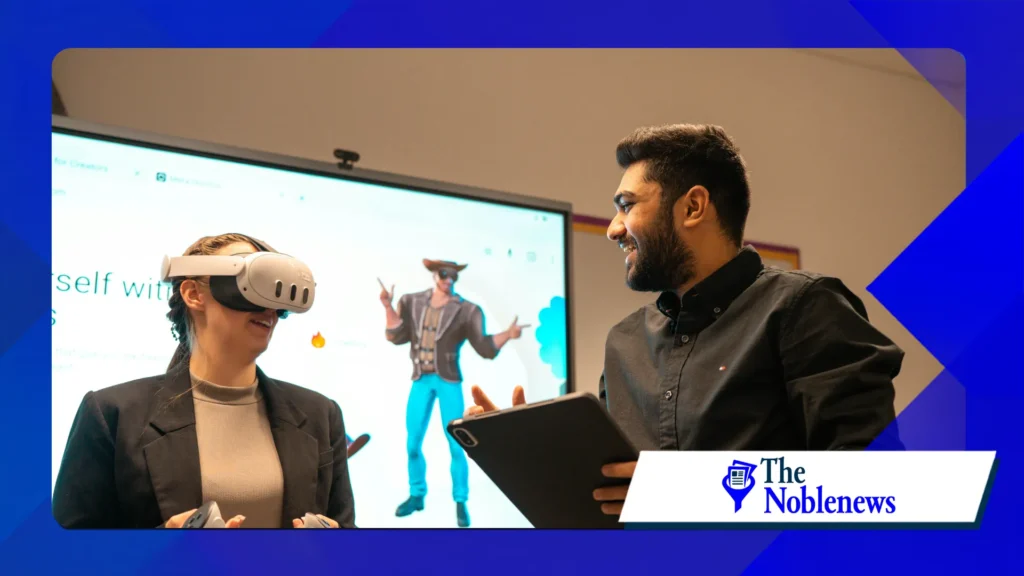
Technological advancements currently dictate the pace of interactive innovation. Early wired headsets constrained movement, but contemporary wireless systems grant absolute freedom, making gameplay significantly more natural and intuitive.
Engineers have successfully integrated eye-tracking and haptic feedback into consumer devices.
Such features allow characters to react organically to a player’s gaze, deepening the psychological connection to digital avatars.
Foveated rendering dynamically allocates processing power where users look directly.
Conserving graphical resources enables developers to render breathtaking environments without requiring bulky, extremely expensive computer hardware for smooth performance.
Seeing how virtual reality is changing the gaming industry requires understanding these hardware milestones.
Accessibility improves drastically when setup processes become effortless, inviting casual gamers into complex simulated universes.
Major manufacturers continuously reduce headset weight to minimize physical fatigue.
Extended play sessions become comfortable, which directly supports complex narratives and competitive multiplayer tournaments that require sustained intense focus.
Why Is Content Retention Crucial Today?
Initial device sales matter little without compelling software libraries.
Studios must create replayable adventures that incentivize users to return daily, rather than abandoning expensive hardware after a few hours.
Multiplayer environments excel at establishing long-term user habits.
Cooperative missions and competitive arenas build social obligations among friends, naturally generating recurring revenue through microtransactions and premium expansion packs.
Fitness applications and rhythm games introduce entirely new demographics.
Individuals who never previously purchased consoles now subscribe to monthly workout services, demonstrating another way virtual reality is changing the gaming industry.
Independent developers often pioneer the most innovative gameplay mechanics.
Without massive corporate budgets, these small teams take creative risks, experimenting with spatial physics and unconventional locomotion techniques quite successfully.
Acquiring new users frequently relies heavily on social media discovery.
Viral clips showing hilarious in-game interactions convince millions to purchase headsets, proving that community-generated content effectively drives market penetration.
Leading educational institutions also analyze these behavioral trends.
Researchers at MIT’s Game Lab investigate spatial computing, providing valuable data regarding human-computer interaction patterns within fully simulated three-dimensional environments.

What Are The Latest 2026 Market Statistics?
Financial data clearly illustrates the massive scale of current growth.
Revenue streams increasingly shift away from hardware sales toward lucrative digital storefronts, subscription services, and recurring in-app purchases.
Understanding precisely how virtual reality is changing the gaming industry demands rigorous statistical analysis.
We must examine concrete numbers across various sectors to appreciate the full economic impact globally.
Recent industry reports project exceptional global revenue figures.
++ Why VR underwater experiences fascinate adventure seekers
Evaluating hardware dominance against content spending reveals fascinating consumer priorities, highlighting where major corporations should direct their future research and development.
| Metric Analyzed | 2025 Market Value | 2026 Projected Value | Growth Trajectory |
| Global VR Gaming Revenue | $35.47 Billion | $41.18 Billion | 16.6% CAGR |
| Active Monthly Users | 145 Million | 171 Million | High Acceleration |
| Standalone Headset Share | 52.3% | 56.8% | Market Dominant |
| Multiplayer App Spending | $4.1 Billion | $5.3 Billion | Exponential Rise |
Numbers within this table validate the medium’s mainstream arrival.
Companies ignoring these precise metrics risk losing substantial market share to agile competitors who prioritize spatial computing initiatives immediately.
Hardware margins continue shrinking as manufacturing efficiency improves dramatically.
Read more: The role of virtual reality AI tutors in personalized learning
Consequently, platform holders aggressively court elite software developers, offering lucrative exclusivity contracts to secure systemic dominance within the ecosystem.
How Do Social Ecosystems Foster Engagement? virtual reality is changing the gaming industry
Digital spaces currently function as modern public squares.
Teenagers and young adults increasingly utilize immersive lobbies not merely for competition, but to hang out, converse, and build meaningful relationships.
Customization drives enormous emotional investment within these shared worlds.
Purchasing unique digital clothing or designing personalized virtual apartments transforms a generic software application into a genuinely cherished personal space.
Live events hosted inside games attract staggering audiences.
++ How deep ocean carbon sinks influence climate stability
Virtual concerts and exclusive movie premieres create communal experiences that transcend geographical limitations, uniting global populations simultaneously within synchronized digital instances.
Nobody can deny that virtual reality is changing the gaming industry by redefining social connectivity.
Friendships formed through cooperative survival games often transition into real-world networks, strengthening community bonds deeply.
Moderating these expansive environments presents significant operational challenges.
Companies must develop sophisticated artificial intelligence tools to ensure player safety and maintain welcoming atmospheres free from harassment or toxic behavior.
User-generated content empowers passionate fans to shape their universes.
Providing robust creation tools allows players to design custom levels, ensuring endless replayability without requiring continuous developer intervention or funding.
Frequently Asked Questions
How expensive is entry-level hardware today?
Prices have decreased significantly over the past five years.
Consumers can now purchase capable standalone devices for roughly three hundred dollars, making immersive entertainment accessible to average household budgets.
Does motion sickness still affect new users?
Developers have largely mitigated nausea through advanced design practices.
Higher refresh rates, stable framerates, and intelligent locomotion options comfortably accommodate sensitive individuals during extended digital exploration sessions.
Can I play traditional games inside immersive environments?
Many systems indeed offer virtual theater modes.
Players can project their classic two-dimensional titles onto massive digital screens, enjoying older libraries while relaxing inside customized, atmospheric three-dimensional surroundings.
Why do analysts believe virtual reality is changing the gaming industry so rapidly?
Unprecedented immersion creates unparalleled user retention and monetization opportunities.
Corporations recognize that spatial computing represents the inevitable next frontier for digital interaction, prompting massive financial investments globally.
Conclusion
Reflecting upon recent technological leaps reveals an exciting trajectory.
Interactive entertainment has permanently evolved beyond the television screen, demanding our physical presence and complete sensory participation to function properly.
Skeptics previously dismissed these innovations as fleeting gimmicks.
However, billions of dollars in annual revenue definitively prove that spatial computing commands a permanent, highly lucrative position within modern culture.
Studios must adapt their methodologies to survive this transition.
Ignoring the spatial dimension guarantees irrelevance, while embracing immersive mechanics opens doors to entirely new creative paradigms and revenue streams.
Ultimately, virtual reality is changing the gaming industry by placing human experiences at the center of digital worlds.
We are stepping through the glass, becoming active participants instead of passive observers.
Readers seeking deeper insights into technological evolution should explore authoritative resources.
Reviewing reports from the National Institute of Standards and Technology provides excellent foundational knowledge regarding spatial computing standards.
++ How Virtual Reality is Changing the Gaming Industry
++ How Virtual Reality is Changing the Gaming Industry
\