
How the “Getting Robbed” Meme Jokes About Phone Distraction
Anúncios
This absurd scenario forms the core of the viral getting robbed meme trend.
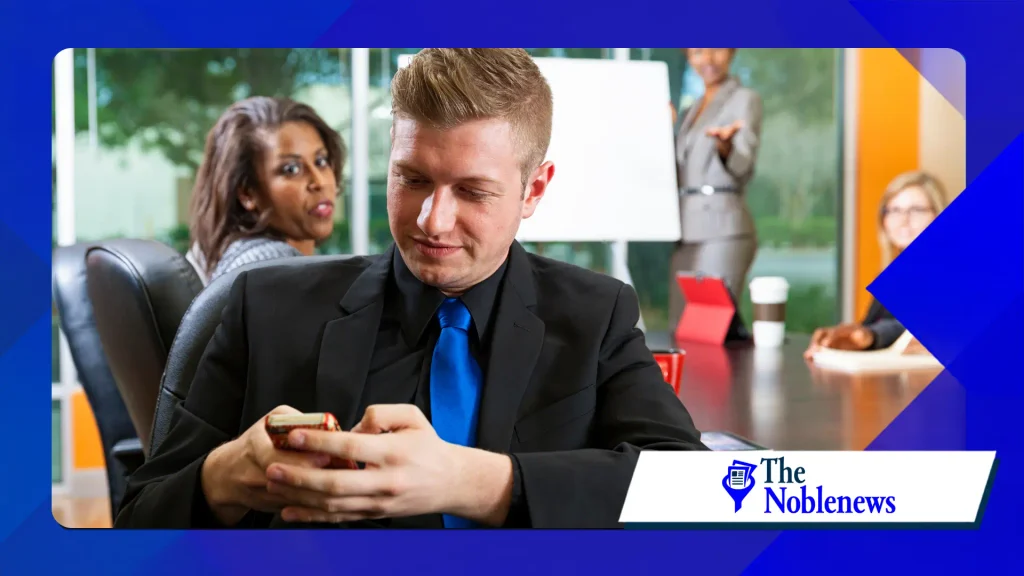
Picture this scenario: a burglar slips quietly through a broken window, tiptoes past the sofa, and begins loading a flat-screen television into a sack.
Meanwhile, the homeowner sits three feet away on the couch, completely oblivious, scrolling through short-form videos with headphones firmly clamped over their ears.
Across platforms like TikTok, Instagram Reels, and X, creators use exaggerated visual comedy to highlight a very real modern phenomenon: total immersion in our digital devices.
While the jokes rely on extreme hyperbole, the humor lands precisely because it taps into a shared truth.
Most people have missed a doorbell, ignored a partner’s question, or walked past a friend because their attention was locked onto a smartphone screen.
By exaggerating screen time consequences into a full-scale home invasion, the trend uses dark comedy to explore our collective loss of situational awareness.
Key Takeaways
- Absurdist Humor: The trend relies on hyperbolic scenarios where individuals remain oblivious to burglaries due to deep phone focus.
- Cultural Commentary: Behind the comedy lies a genuine reflection on smartphone addiction, split attention, and digital detachment.
- Observational Safety: The meme reflects actual cognitive research regarding “inattentional blindness,” where focus on one task renders visible events unnoticeable.
- Healthy Digital Boundaries: Reclaiming situational awareness requires intentional habits like physical device separation and structured screen breaks.
The Structure of the “Getting Robbed” Meme Format
The template follows a simple, repeatable comedic structure that makes it accessible for creators across social platforms.
Usually paired with trending audio clips or tense movie soundtracks, the videos contrast extreme external chaos with calm internal distraction.
- The Setup: A person sits in a room, visibly glued to a phone, playing a game, streaming a video, or reading comments.
- The Intrusion: Someone acting as an intruder enters the background, often exaggeratedly sneaking, carrying away valuable household items, or replacing furniture with cheap cardboard boxes.
- The Punchline: The victim notices something trivial—like a sudden draft or low Wi-Fi signal—while remaining completely unaware that their entire living room has been cleared out.
The comedic tension relies on dramatic irony. The audience sees the entire crime unfolding in broad daylight, while the main character remains isolated inside their personal digital bubble.
Psychological Insights: Why the Joke Strikes a Chord
Why does a joke about home intrusion resonate so strongly with millions of online viewers? The answer lies in the psychological concept known as inattentional blindness.
Inattentional blindness occurs when an individual fails to perceive an unexpected stimulus in plain sight because their attention is entirely engaged elsewhere.
Psychological experiments, such as the famous selective attention test conducted by researchers Daniel Simons and Christopher Chabris, demonstrated that people focused on a task frequently miss highly obvious events happening right before their eyes.
Smartphones are specifically engineered to capture and hold visual and auditory attention.
Through continuous notifications, infinite scrolling algorithms, and immersive audiovisual feedback, mobile devices demand high cognitive loads.
When someone gets lost in a feed, their peripheral vision and environmental auditory cues shrink significantly.
++ Why the “My Reaction” TikTok Trend Turns Faces Into Reviews
The meme exaggerates this psychological reality to point out how vulnerable we become when absorbed in screen light.
Comparing Digital Distraction Scenarios
To understand how digital immersion impacts daily life, consider how phone distraction manifests across typical environments compared to the meme’s hyperbolic representation.
Read more: How algorithm-driven meme trends shape viral content
| Environment | Meme Representation | Real-World Equivalent | Cognitive Impact |
| Home Living Room | A burglar steals the television and furniture while you scroll. | Missing spoken conversations, overcooking dinner, or failing to hear doorbells. | Reduced presence with family and housemates. |
| Pedestrian Sidewalk | Walking straight into a open vault or construction site while texting. | Walking into streetlamps, stepping off curbs without looking, or bumping into others. | Physical danger and diminished situational awareness. |
| Public Transit | Having your backpack emptied completely while watching video clips. | Missing your transit stop or failing to notice lost personal items. | Spatial disorientation and loss of surroundings. |
| Workplace/School | A full office evacuation occurs while you wear noise-canceling headphones. | Missing key meeting details, glossing over instructions, or losing task focus. | Reduced productivity and cognitive fatigue. |

The Science of Screen Focus and Situational Awareness
Situational awareness is the ability to perceive, understand, and predict environmental events around you.
In natural settings, human situational awareness relies on constant scanning of visual inputs, ambient sounds, and physical cues.
According to cognitive research published by organizations like the National Center for Biotechnology Information, heavy screen immersion disrupts perceptual processing.
When processing dense smartphone content, the brain prioritizes central visual fields and dampens auditory processing.
Noise-canceling technology amplifies this effect. Combining active noise-cancellation (ANC) headphones with high-brightness smartphone displays isolates two primary sensory inputs simultaneously.
While this setup provides an immersive media experience, it effectively disconnects the user from their immediate physical surroundings.
How Meme Culture Helps Us Process Digital Habits
Memes often serve as cultural outlets for processing complex social anxieties. Rather than delivering rigid lectures on screen time limits, internet culture uses self-deprecating satire to address shared habits.
When users like, share, or comment on a “getting robbed” video, they implicitly acknowledge their own phone consumption.
The self-aware reaction—”This would literally be me”—acts as a lighthearted admission of over-reliance on technology.
By turning screen addiction into a shared joke, online communities create space to talk about digital burnout without feeling judged.
++ How miniature painting hobby attracts new geek audiences
Humor acts as a mirror, prompting individuals to evaluate their habits in a relatable context.
Practical Steps to Reclaim Situational Awareness
While you likely will not lose your couch to a sneaky thief while checking notifications, reducing phone distraction improves safety, focus, and real-world connection.
Audit Audio Transparency Settings: If you wear headphones in public or shared spaces, use transparency mode or keep one ear unmasked to maintain auditory awareness.
Establish Device-Free Zones: Designate specific areas, such as the dinner table or bedroom entryway, as phone-free zones to encourage environmental engagement.
Turn Off Non-Essential Notifications: Minimize visual disruptions by disabling push alerts from shopping apps, social networks, and casual games.
Practice Single-Tasking: Dedicate blocks of time to watching a movie or reading a book without dual-screening your smartphone.

Conclusion
The “getting robbed” meme endures because it transforms a very real contemporary issue into accessible visual comedy.
By exaggerating our digital blind spots, the trend highlights the friction between physical environments and digital immersion.
While laughing at absurd scenarios is fun, taking a moment to look up from the screen reminds us to stay present in the physical world around us.
Frequently Asked Questions
What does the “getting robbed” meme mean?
The trend is a comedic format where creators portray individuals so deeply absorbed in their smartphones or headphones that they fail to notice an intruder stealing items right next to them.
It satirizes extreme phone distraction and modern technology habits.
What is inattentional blindness, and how does it relate to screen focus?
Inattentional blindness is a psychological phenomenon where an individual fails to notice visible objects or events because their attention is focused elsewhere.
Phone focus triggers this effect by consuming visual and cognitive processing power.
How can I improve my situational awareness while using devices?
You can build better situational awareness by using transparency mode on headphones, limiting screen use while walking or commuting, setting app time limits, and keeping ambient noise audible in shared environments.
++ How Technology is Hijacking Your Mind — from a Magician and Google Design Ethicist
++ How are today’s biggest tech trends affecting our human rights?
