
Hyper-Realistic Avatars: How VR Is Transforming Personal Identity Online
Anúncios
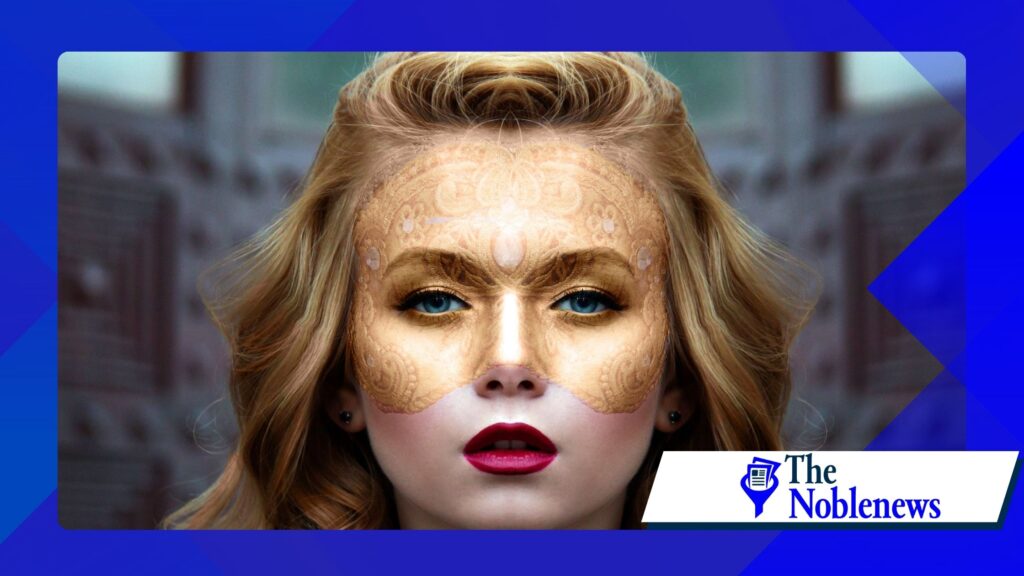
Hyper-Realistic Avatars are changing how people build, express, and expand personal identity in virtual spaces.
As VR platforms evolve into richer social ecosystems, users discover a level of representation once impossible on traditional screens. This shift influences communication, emotion, trust, and self-perception.
Virtual environments increasingly resemble physical interactions, encouraging deeper social presence and more authentic self-expression.
That combination reshapes how people participate in communities, develop confidence, and explore identity in flexible and meaningful ways.
A growing number of companies treat avatars not as graphic characters, but as psychological extensions. That cultural and technological transition is accelerating fast, making hyper-realism a core pillar of digital life.
Anúncios
What are hyper-realistic avatars and why are they becoming central to VR identity?
Hyper-realistic avatars are high-fidelity digital representations designed to mirror physiological traits, micro-expressions, and body movement with accuracy.
These avatars integrate facial tracking, motion capture, and AI-driven rendering to simulate a presence closer to real human interaction.
Adoption grew quickly as VR platforms emphasized authenticity. Meta, HTC, and Apple expanded face-tracking capabilities that capture subtle movements, creating expressions that closely match real behavior.
Anúncios
As tracking accuracy improves, users identify more naturally with their digital selves.
A recent Stanford Virtual Human Interaction Lab article highlighted how accurate avatars increase empathy and trust during social interactions, influencing long-term digital engagement patterns.
That insight shows hyper-realism matters for more than aesthetics.
How do VR platforms create hyper-realistic avatars?
VR platforms rely on advanced rendering pipelines, neural networks, and sensor-based motion systems. These layers work together to reproduce natural behaviors such as blinking, eyebrow shifts, lip curvature, and head position.
Modern headsets capture facial muscle activity through inward-facing cameras, translating subtle gestures into digital output.
AI reconstruction algorithms fill gaps by predicting expressions that enhance realism without distorting the user’s identity.
Cloud-based rendering further increases accuracy. Companies like NVIDIA and Epic Games support real-time face tracking using technologies such as MetaHuman Animator.
These tools bring film-quality detail into everyday VR apps, pushing boundaries of personal identity representation.
Why do hyper-realistic avatars influence user behavior online?
Hyper-realistic avatars influence behavior because humans react instinctively to perceived presence.
When users see faces that behave naturally, conversations feel less artificial, and emotional nuance becomes easier to interpret.
Many users feel safer revealing aspects of their identity that are overlooked in physical environments, while others discover traits they had not explored before.
VR presence research from the University of Copenhagen demonstrated that more realistic avatars lead to stronger emotional involvement, higher confidence, and increased social cohesion in virtual spaces.
This real-world effect fuels adoption.
What psychological benefits come with using hyper-realistic avatars?
Several psychological benefits emerge when identity is represented faithfully in VR environments:
- Greater comfort during communication.
- Improved self-confidence during social interactions.
- Stronger emotional connection with other users.
- Increased empathy due to realistic body language.
- Reduced anxiety in public-speaking and group settings.
- Easier development of trust in professional interactions.
These benefits motivate individuals who struggle with self-expression or social anxiety to participate more actively in digital communities.
+ The Evolution of VR Graphics: From Pixelated Worlds to Photorealism
How do hyper-realistic avatars enable identity exploration in safe environments?
Identity exploration becomes more intentional when VR provides controlled environments that reduce social pressure.
Hyper-realistic avatars allow users to represent themselves accurately or modify features gradually, testing different ways of presenting identity.
Virtual platforms support this exploration by offering layers of privacy. Users can experiment with gender expression, physical traits, or personal style without fear of judgment.
Each adjustment feels natural because the avatar still maintains human-like detail and behavior.
This dynamic encourages self-discovery, helping individuals understand what aligns best with their authentic selves.
Which industries are adopting hyper-realistic avatars the fastest?
Several industries rely on hyper-realistic avatars to create immersive and trustworthy environments:
- Education and training, where lifelike representation improves engagement.
- Healthcare, especially in therapy sessions and exposure-based treatments.
- Corporate collaboration, replacing traditional video conferencing.
- Entertainment, enabling personalized characters in games and films.
- Retail, offering realistic digital try-on experiences.
These applications demonstrate how avatars influence both personal and professional spheres.
To explore early adopters, the MetaHuman overview by Epic Games provides insight into industry-grade avatar creation:
https://www.unrealengine.com/en-US/metahuman
When did hyper-realistic avatars become technically possible?
Development accelerated between 2021 and 2024 when improvements in VR optics, sensor precision, and AI interpolation created conditions for hyper-realism. The release of consumer-grade devices with advanced face tracking made widespread adoption viable.
By 2025, hardware capable of high-fidelity expression capture became standard, allowing even mid-range headsets to create competitive representations.
The gap between professional mocap studios and at-home VR narrowed dramatically.
Continuous improvements in neural rendering made avatars lighter and more accessible, even for mobile VR systems.
What challenges remain in the evolution of hyper-realistic avatars?
Challenges include processing demands, privacy concerns, emotional misinterpretation, and potential uncanny valley effects. Facial tracking requires sensitive data that must follow strict privacy protection standards.
Misalignment between real and captured expressions may distort communication, causing accidental misunderstandings. Developers work to refine interpolation models to avoid these errors.
Ethical questions also arise regarding identity manipulation, impersonation risk, and the psychological effects of extended avatar use.
These issues require very careful oversight by policymakers and psychology professionals.
+ How VR Is Empowering Autism Therapy and Social Learning
Which features differentiate high-quality hyper-realistic avatars?
High-quality avatars share key characteristics:
- Accurate facial animation and micro-expression capture.
- Natural eye movement and lip synchronization.
- Skin textures that adjust to lighting conditions.
- Body tracking with minimal jitter.
- Smooth transitions between gestures.
- Real-time rendering that does not introduce lag.
Below is a table summarizing essential qualities:
| Feature | Importance | Impact on User Experience |
|---|---|---|
| Micro-Expression Accuracy | Critical | Enables emotional authenticity |
| Body-Tracking Precision | High | Reduces motion dissonance |
| Lighting Adaptation | High | Enhances realism in varied environments |
| AI Facial Prediction | Medium | Improves subtle animations |
| Low Latency Rendering | Essential | Prevents disconnect and increases presence |
These factors determine how convincing the avatar feels during interactions.
How does VR social interaction change with hyper-realistic avatars?
Social interaction becomes more fluid and intuitive. Friends, colleagues, and strangers communicate with expressions that resemble in-person behavior. Subtle cues like eyebrow raises or half-smiles enrich conversations.
Groups experience deeper immersion because avatars occupy space realistically and mirror physical gestures. Professional meetings benefit greatly, as presenters maintain authority and clarity through natural posture and real-time facial feedback.
VR communities become more welcoming as identity representation grows more accurate. Users feel “seen,” allowing stronger emotional bonds.
Frequently Asked Questions
Do hyper-realistic avatars require expensive VR equipment?
Not necessarily. Many platforms offer scalable realism that adapts to device capabilities, although advanced features work best with higher-end headsets.
Are hyper-realistic avatars safe for psychological well-being?
Yes, when used responsibly. Research suggests benefits for confidence and communication, but overuse or identity detachment should be monitored.
Can hyper-realistic avatars improve remote work?
Absolutely. Lifelike avatars make meetings more intuitive, creating deeper collaboration and stronger interpersonal connection compared to traditional video calls.
Will avatars replace human video entirely?
Unlikely in the near term, but VR meetings will gain space as realism continues to evolve and devices become more accessible.
For additional insights into avatar realism research, you can explore work published by the Stanford Virtual Human Interaction Lab: https://vhil.stanford.edu/
Final considerations
Hyper-Realistic Avatars mark a turning point in how people express identity, communicate emotions, and navigate digital spaces.
VR continues transforming online presence into a more human, relatable, and psychologically rich experience. Users gain freedom to explore identity with nuance while benefiting from realistic interaction.
As hardware and AI-driven rendering advance, VR identity becomes increasingly integrated with daily life.
In the coming years, hyper-realistic avatars will shape virtual workplaces, social platforms, entertainment ecosystems, and therapeutic environments worldwide.
+ The Role of Virtual Reality in Education and Skill Training in 2025
\