
How Pancake Lenses Changed Modern VR Headsets
Annunci
If you put on a virtual reality headset using pancake lenses prior to 2022, you likely remember the experience clearly: a heavy, boxy plastic enclosure strapped tightly to your face, persistent eye strain after twenty minutes, and an annoying blur called “god rays” washing out dark scenes.
For years, bulky display optics represented the single biggest bottleneck holding back mainstream VR adoption.
Everything changed when optical engineers replaced traditional fresnel lenses with folded optical paths.
By bouncing light back and forth between polarizing films and spherical glass, pancake optics allowed display panels to sit dramatically closer to the human eye.
This engineering breakthrough radically altered the physical architecture, visual clarity, and day-to-day usability of modern VR hardware.
Punti chiave
- Form Factor Revolution: Pancake optics reduced headset depth by over 40%, eliminating front-heavy strain and enabling sleeker, lighter hardware.
- Superior Edge-to-Edge Clarity: Folded light paths dramatically expanded the optical “sweet spot,” virtually eliminating chromatic aberration and glare.
- Higher Display Efficiency: Pairing pancake optics with compact micro-OLED panels allowed manufacturers to push pixel density past 3,000 PPI.
- Trade-Offs to Master: Lower light transmission efficiency requires vastly brighter displays, impacting battery life and thermal dissipation.
What Are Pancake Lenses in Virtual Reality?
A pancake lens is a compact optical assembly that uses folded light paths to shorten the physical distance required between a display panel and the viewer’s eyes.
Traditional headsets relied on thick, curved refractive lenses or ridged fresnel optics to bend light into your pupils.
These legacy systems required significant physical distance—often 40 to 50 millimeters—to properly focus the display image.
In contrast, pancake design utilizes circular polarization, quarter-wave plates, and beam splitters to fold light back and forth inside the lens stack itself.
As light leaves the display panel, it travels through a polarizing filter, bounces between reflective surfaces inside the lens, and rotates its polarization state before finally exiting into the user’s eye.
By forcing light to travel along a folded zigzag pathway internally, optical engineers compressed the required focal distance down to a fraction of its original depth.
The display can now sit almost directly against the optical element, collapsing the entire front-end housing of modern VR devices.
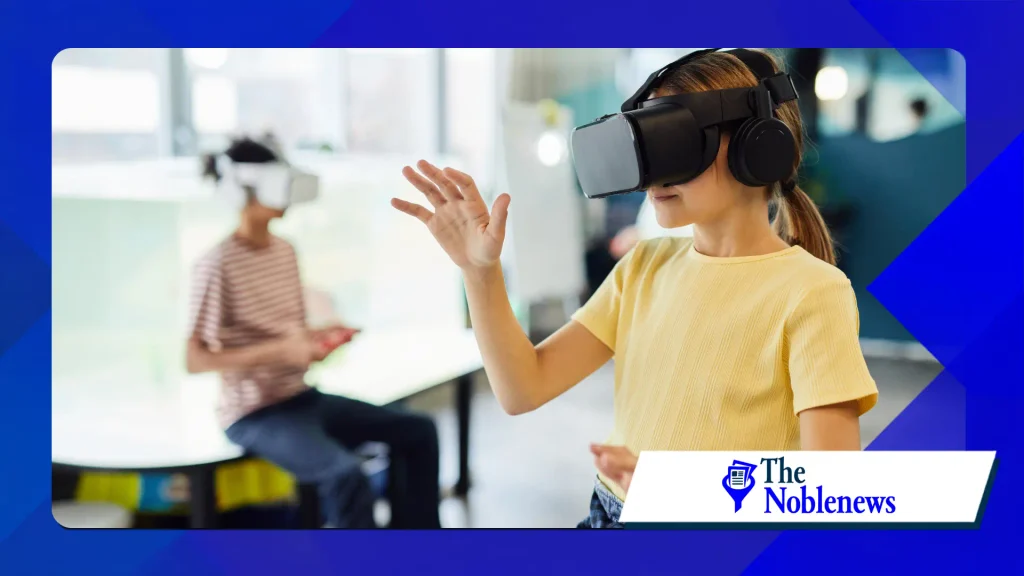
Why Did Legacy Fresnel Lenses Hold VR Back for So Long?
For the first decade of consumer virtual reality, fresnel optics were the industry standard.
Engineers favored fresnel designs because concentric ring patterns molded into thin plastic reduced the weight of solid glass lenses.
However, this cost-effective shortcut introduced severe optical compromises that limited the quality of early immersive experiences.
Consistently, users encountered severe visual artifacts known as “god rays” or fresnel glare.
When high-contrast images—such as bright white text on a pitch-black background—passed through the ridged rings of a fresnel lens, light scattered unpredictably across the display.
This scattering reduced image contrast, created distracting visual halos, and broke immersion.
Furthermore, fresnel lenses suffered from a tiny “sweet spot”—the narrow zone where the image stays sharp and distortion-free.
Shifting the headset even a millimeter out of alignment caused severe blurriness around the edges of your view.
Secondo una ricerca pubblicata dall' Centro nazionale per le informazioni sulla biotecnologia, proper ergonomic alignment and reduced visual distortion are crucial factors in minimizing display-induced motion sickness and oculomotor fatigue during extended head-mounted display usage.
How Pancake Lenses Transformed Headset Ergonomics and Comfort
Weight distribution matters far more than absolute weight when wearing hardware on your face.
Early headsets weighed around 500 grams, but because their display engines protruded five inches forward from the user’s brow, that mass created a long leverage arm.
The resulting torque pulled the visor down onto the nose, requiring tight straps and causing neck strain within thirty minutes of active use.
Focal compression from pancake optics changed this center-of-gravity calculation entirely.
By moving display panels over an inch closer to the face, manufacturers shifted the headset’s balance point backward toward the facial bones.
++ L'ascesa delle ispezioni di gallerie tramite realtà virtuale nell'ingegneria civile
Even when total mass remains similar, reducing front protrusion eliminates the rotational force pulling down on the face.
| Ergonomic Metric | Legacy Fresnel Headsets (Pre-2022) | Modern Pancake Headsets (2026) |
| Optics-to-Display Distance | 40mm – 55mm | 10mm – 20mm |
| Front Enclosure Depth | 80mm – 100mm | 35mm – 50mm |
| Visual Sweet Spot | Narrow (~20% center area) | Broad (~80%+ full field) |
| God Rays / Ring Glare | Severe in high-contrast scenes | Virtually eliminated |
| Light Transmission Efficiency | High (~80% – 90%) | Low (~10% – 15%) |
This structural shrinking enabled entirely new head-strap configurations.
Designers can now build sleek, visor-style frames, halo mounts, or lightweight soft straps that distribute resting weight evenly across the forehead.
Per saperne di più: L'ascesa della realtà virtuale nella pianificazione dei magazzini per l'ottimizzazione della logistica
Modern headsets feel dramatically lighter in motion simply because mass stays tightly centered against the head during rapid turns.
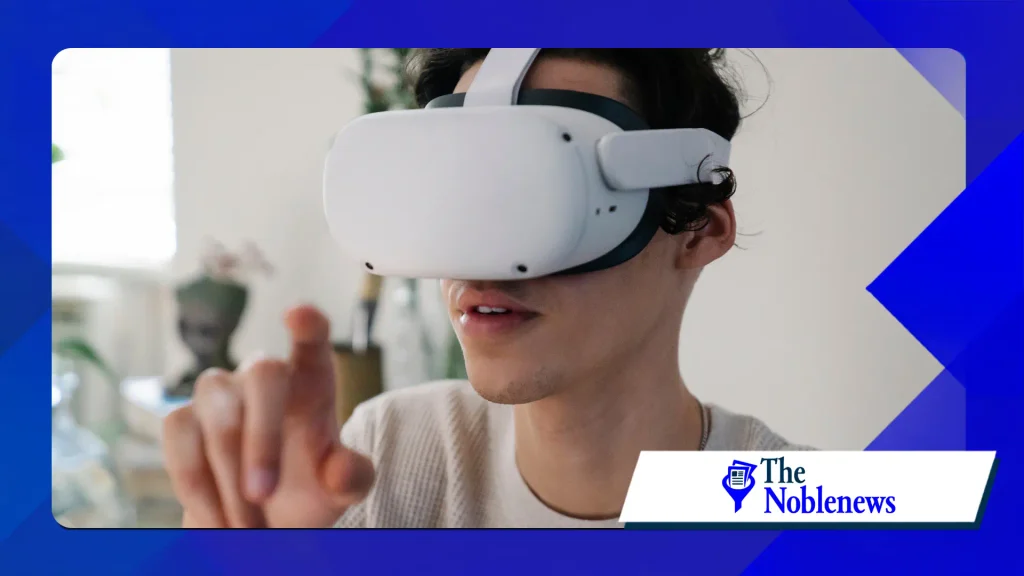
Which Modern VR Headsets Rely on Pancake Optics?
The transition from fresnel to pancake lenses shifted from an experimental concept to an industry requirement in just a few short hardware generations.
Today, every flagship headset aimed at consumers, enterprise professionals, or spatial computing enthusiasts relies on folded optics.
Meta Quest 3 & Quest 3S: Meta brought pancake optics into mass-market hardware, utilizing dual LCD panels paired with custom folded lenses to deliver 25% sharper center clarity and 50% better edge sharpness than its predecessor.
Apple Vision Pro: Apple combined multi-element custom pancake lenses with dual 4K micro-OLED displays, achieving unprecedented pixel density and spatial text legibility across a broad viewing area.
Pimax Crystal Light & Industry Enterprise Hardware: High-end simulator setups combine advanced folded glass with high-resolution displays to provide crystal-clear cockpit instrumentation without edge distortion.
Pico 4 Enterprise Series: Designed specifically for workplace training, this platform uses compact pancake stacks to reduce wear fatigue during multi-hour simulation sessions.
++ La crescita del turismo legato ai fan attorno ai luoghi iconici delle riprese cinematografiche.
This universal adoption proves that user comfort and visual clarity are now non-negotiable requirements for consumer spatial computing.
What Are the Technical Trade-Offs of Folded Optics?
While pancake lenses solved spatial and clarity challenges, they introduced a steep physics problem: severe light loss.
Because folded light pathways rely on polarizing filters and semi-reflective mirrors to bounce light internally, a vast majority of generated photons never escape the optical stack.
In practice, standard pancake lens assemblies transmit only 10% to 15% of the display’s backlight output to the human eye.
The remaining 85% to 90% of light energy gets absorbed or reflected away within the glass layers.
To deliver a bright, vivid image through such dense filters, manufacturers must engineer display backlights that burn vastly brighter than traditional mobile screens.
Driving display panels at high luminance levels introduces several engineering challenges:
Higher Power Consumption: Displays require significantly more electrical power to punch through low-transmission optics, directly impacting battery performance.
Thermal Management Demands: High-output displays and micro-OLED panels generate localized heat, requiring whisper-quiet internal cooling fans and aluminum heat spreaders.
Ghosting Artifacts: Secondary optical reflections inside multi-layer glass can occasionally create soft “ghost” reflections around high-brightness objects, demanding extremely precise anti-reflective lens coatings.
Industry engineers overcome these optical efficiency hurdles by pairing folded optics with emerging micro-OLED technology.
Micro-OLED screens deliver microscopic pixel densities along with extreme peak brightness levels, overcoming optical light loss without requiring massive power supplies.
How Pancake Optics Compare to Next-Gen Holographic and Metalens Designs
Folded optics transformed the present era of spatial computing, but optical engineering continues to evolve rapidly.
Researchers are actively pursuing next-generation display architectures to push size and efficiency boundaries even further.
Holographic Optical Elements (HOE)
Holographic lenses record wave-field interference patterns onto ultra-thin photographic films. When laser light hits the film, it bends precisely into the viewer’s eye.
HOE setups can reduce lens thickness down to a fraction of a millimeter, but current manufacturing costs and color-calibration challenges limit near-term commercial viability.
Flat Metalenses
Metalenses utilize metasurface arrays—billions of microscopic semiconductor pillars arranged on a completely flat plane—to manipulate light wavelengths individually.
Ricerca pubblicata da IEEE Xplore Digital Library demonstrates that nanostructured metasurfaces can focus full-spectrum light without multi-layer glass stacks or polarizing light loss.
While flat metalenses represent the ultimate future of lightweight eyewear, manufacturing nanostructures at consumer price points remains challenging.
Pancake optics will remain the dominant optical engine for the foreseeable future.
Domande frequenti
Do pancake lenses completely eliminate the screen-door effect in VR?
No, pancake optics do not eliminate the screen-door effect on their own. The screen-door effect is determined by pixel density (Pixels Per Inch) and display panel fill-factor.
However, because pancake lenses offer vastly superior edge-to-edge clarity and sharpness, high-density displays appear noticeably crisp and clean across your entire field of view.
Can you use prescription inserts with pancake lens headsets?
Yes. Custom magnetic prescription lens inserts fit seamlessly over pancake lens stacks.
Because pancake lenses sit closer to your eyes, wearing bulky traditional eyeglasses frames inside the facial interface can cause scratch risks, making low-profile prescription inserts highly recommended for vision correction.
Why do VR headsets with pancake lenses still feel warm during extended use?
Because pancake lenses transmit only 10% to 15% of light through their internal polarizing layers, headset displays must operate at extremely high brightness levels to deliver a clear image.
Driving display backlights and processors at high power output generates heat, which internal fans dissipate away from your face.
Are pancake lenses better than fresnel lenses for simulator gaming?
Pancake optics offer massive benefits for racing and flight simulators. Simulator pilots must scan peripheral instrument panels and read small text displays constantly without moving their whole head.
The expanded optical sweet spot and sharp edge-to-edge clarity of folded optics make reading cockpit gauges effortless compared to older fresnel headsets.
++ Pancake Optics vs. Aspheric Lenses
++ Análise Comparativa de Lentes para Headset VR: Asférica vs Pancake vs Fresnel
\