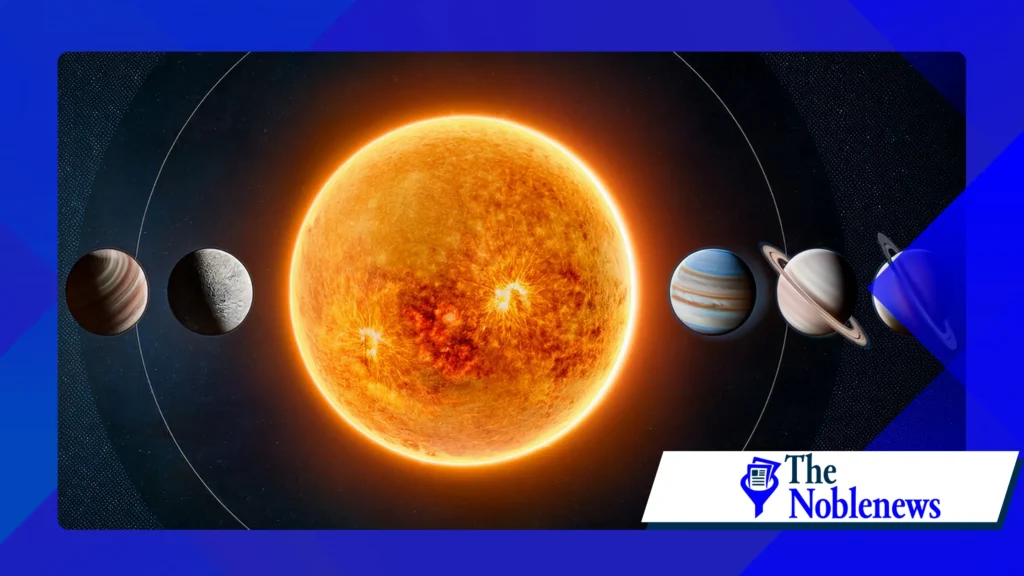
Science Behind Exoplanets: Searching for Habitable Worlds

広告

Exploring the Science Behind Exoplanets allows us to peel back the cosmic veil, transforming distant pinpoints of light into tangible, rocky worlds.

By analyzing subtle stellar wobbles and atmospheric chemical signatures, researchers are no longer just cataloging planets; they are hunting for the specific biological markers of life, fundamentally reshaping our understanding of humanity’s place within the vast, silent galaxy.

Science Behind Exoplanets

探査の概要

  • The fundamental detection methods used by modern observatories.
  • Atmospheric spectroscopy and the identification of vital biosignatures.
  • The pivotal role of the “Goldilocks Zone” in planetary habitability.
  • Future missions designed to capture direct images of Earth-like planets.

What is the Science Behind Exoplanets and Their Discovery?

Deciphering the cosmos starts with the “Transit Method.” It’s essentially a high-stakes game of shadows, where astronomers monitor infinitesimal dips in a star’s brightness as a planet passes in front.

This technique, perfected by the Kepler mission and refined by TESS, allows researchers to calculate diameters and orbital periods with staggering mathematical precision. There is something profoundly humbling about measuring a shadow from trillions of miles away.

Another critical pillar is “Radial Velocity.” This method detects the subtle gravitational tug-of-war between a planet and its host star, revealing the hidden mass of the orbiting body through a telltale wobble.

広告

By layering these two datasets, we can finally determine a world’s density. This is how we distinguish between bloated gas giants and the rocky, terrestrial terrains where life might actually find a foothold.

How Does Atmospheric Spectroscopy Reveal Life?

To truly grasp the Science Behind Exoplanets, one must look at light filtering through a planet’s atmosphere during a transit, creating a unique spectral fingerprint for analysis.

Instruments like the James Webb Space Telescope (JWST) detect chemical compounds such as methane, carbon dioxide, and water vapor by measuring specific wavelengths of infrared light being absorbed.

広告

The presence of “biosignatures,” like the simultaneous existence of methane and oxygen, suggests a chemical disequilibrium that strongly indicates active biological processes occurring on the surface below.

Recent 2026 data from the European Southern Observatory’s Extremely Large Telescope provides even higher resolution, allowing us to map weather patterns on worlds located many light-years away.

Detailed information on these chemical signatures can be explored through the NASA Exoplanet Archive, which serves as a primary database for confirmed planetary characteristics.

Why is the Habitable Zone Crucial for Life?

Astrophysics prioritizes the “circumstellar habitable zone,” a delicate region where temperatures allow liquid water to remain stable on a planet’s surface without freezing or boiling away instantly.

The specific boundaries of this zone depend entirely on the star’s luminosity; cooler M-dwarf stars have much tighter habitable zones compared to hotter, sun-like G-type stars.

However, habitability is never just about distance. Atmospheric pressure and the greenhouse effect play massive, often overlooked roles in maintaining a climate suitable for complex organic molecules to thrive.

++ 量子物理学における最近の進歩を解説

Magnetic fields also provide vital protection, shielding the atmosphere from harsh stellar winds that would otherwise strip away the protective gasses necessary for sustaining a long-term biosphere.

Science Behind Exoplanets

Comparison of Notable Potentially Habitable Planets (2026 Data)

Planet NameDistance (LY)Mass (Earths)Star TypePrimary Interest
Proxima Centauri b4.2~1.07Red DwarfClosest potential Earth-analog
TRAPPIST-1e39.5~0.69Ultra-cool DwarfPotential for liquid surface water
Kepler-186f582~1.15Red DwarfFirst Earth-sized planet in HZ
TOI-700 e100~0.85Red DwarfStable orbit in a multi-planet system

Which Technologies Are Shaping Future Discoveries?

Advancements in this field now include the development of “Starshades,” massive petal-shaped structures that block starlight to allow direct imaging of faint, nearby planetary bodies.

Direct imaging is revolutionary because it moves beyond shadows and wobbles, capturing actual photons reflected from the planet’s surface to study its continents, oceans, and seasonal changes.

Artificial Intelligence also accelerates discovery by processing petabytes of data from space telescopes, identifying subtle patterns that human researchers might overlook during traditional manual data review sessions.

続きを読む: 宇宙望遠鏡が宇宙の理解をどのように再定義しているか

These integrated technologies ensure that the next decade of space exploration will move from simply finding planets to characterizing their environments in vivid, unprecedented biological detail.

When Will We Find a Truly Earth-Like Twin? Science Behind Exoplanets

Current trends suggest that a confirmed “Earth 2.0” orbit around a sun-like star may be identified before the end of this decade. It’s a looming milestone for our species.

While we have found many Earth-sized worlds, most orbit volatile red dwarfs; finding a planet with an identical atmosphere and solar environment remains the ultimate astronomical “Holy Grail.”

International collaborations are currently prioritizing high-fidelity spectroscopic surveys of G-type stars within 50 light-years to maximize the chances of finding a stable, life-supporting planetary environment.

++ 2026年のトレンドである居心地の良いゲームが世界中のカジュアルプレイヤーを惹きつける理由

The launch of the Habitable Worlds Observatory in the coming years will specifically target these systems, utilizing advanced optics to find signs of life in our neighborhood.

Science Behind Exoplanets

The Horizon of Discovery

We have moved from speculative theory to a rigorous empirical discipline that challenges our understanding of the universe and our unique place within it.

By combining precise orbital mechanics with advanced molecular chemistry, we are no longer just looking at dots in the sky, but mapping the potential future frontiers of humanity.

Every new discovery brings us closer to answering the ancient question of whether we are alone, turning science fiction into a measurable, verifiable reality for future generations.

For further academic insights into planetary formation and stellar evolution, visit the Harvard-Smithsonian Center for Astrophysics, a leader in deep-space research.

よくある質問

What is the most common type of exoplanet?

Statistical data suggests that “Super-Earths” and “Mini-Neptunes”—planets with masses between Earth and Neptune—are the most frequently occurring types found throughout the Milky Way galaxy.

Can we travel to these exoplanets yet?

Currently, our propulsion technology is insufficient for interstellar travel; even the closest planet, Proxima Centauri b, would take thousands of years to reach using our fastest modern rockets.

How many exoplanets have been confirmed?

As of early 2026, astronomers have confirmed over 6,000 exoplanets, with thousands of additional candidates awaiting further validation from ground-based telescopes and sophisticated data analysis tools.

What are “biosignatures” in exoplanet research?

Biosignatures are specific chemical elements or patterns, such as the presence of oxygen, ozone, or chlorophyll, that provide scientific evidence of past or present life on a planet.

Is every planet in the habitable zone inhabited?

No, being in the habitable zone only means liquid water could exist; factors like radiation, atmospheric composition, and planetary age determine if life actually develops or survives.

++ Habitable exoplanet – a statistical search for life

++ How astronomers search for life on exoplanets

\
トレンド