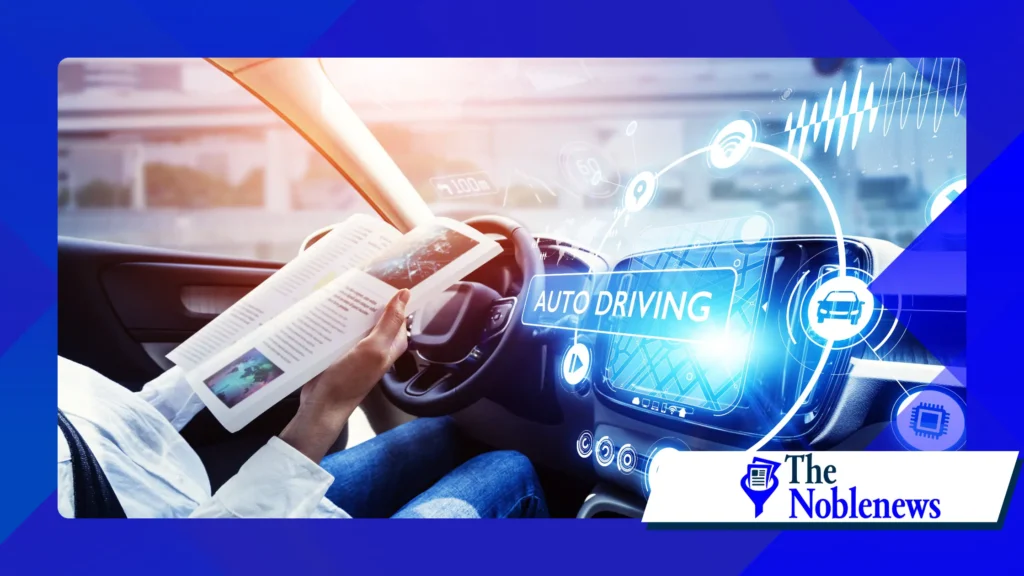
Autonomous Vehicles: The Science Behind Self-Driving Cars
広告

Autonomous vehicles, commonly referred to as self-driving cars, are at the forefront of technological innovation, revolutionizing transportation systems and reshaping modern mobility.
These vehicles rely on sophisticated technologies, including artificial intelligence, sensor integration, and data processing, to navigate environments independently.
Delving into the science behind autonomous vehicles unveils the mechanisms and challenges that define their development and potential.
The Core Technologies Powering Autonomous Vehicles
Autonomous vehicles depend on an intricate network of hardware and software designed to interpret the surrounding environment and make real-time decisions.
Central to this process are advanced sensors, machine learning algorithms, and robust computational systems.
広告
1. Sensor Fusion and Environmental Awareness
Sensor fusion combines data from multiple sources to create a comprehensive understanding of the vehicle’s surroundings. Key components include:
- LiDAR (Light Detection and Ranging): Uses laser pulses to create detailed 3D maps, crucial for obstacle detection and distance measurement.
- Cameras: Capture visual information, such as traffic signs, lane markings, and pedestrians, for contextual analysis.
- Ultrasonic Sensors: Detect nearby objects during low-speed maneuvers, such as parking.
| Sensor Type | Primary Function | Typical Application |
|---|---|---|
| LiDAR | 3D mapping and obstacle detection | Identifying surrounding objects |
| Cameras | Visual context analysis | Reading road signs |
| Ultrasonic Sensors | Proximity detection | Parking assistance |
2. Artificial Intelligence and Machine Learning
AI serves as the brain of autonomous vehicles, processing data from sensors to make navigation decisions. Machine learning models are trained to:
- Identify and classify objects, such as vehicles and pedestrians.
- Predict the movement of other entities.
- Optimize routes based on traffic patterns.
Deep learning, a subset of AI, enhances the system’s ability to recognize complex patterns, such as unusual pedestrian behavior or unexpected obstacles.
広告
Additionally, reinforcement learning is employed in simulations to teach autonomous systems how to handle rare scenarios.
These learning methodologies make autonomous vehicles adaptable, a key feature for dynamic environments.
+ Shopping in the Metaverse: Is Virtual Reality Revolutionizing Retail?
3. High-Definition Mapping
HD maps provide autonomous vehicles with precise details about road geometry, landmarks, and traffic infrastructure.
Unlike traditional maps, HD maps update continuously, offering:
- Lane-level accuracy: Critical for lane-keeping and precise turns.
- Dynamic updates: Integration with cloud services for real-time adjustments, such as construction zones or temporary detours.
Understanding Levels of Vehicle Autonomy
The Society of Automotive Engineers (SAE) defines six levels of driving automation, ranging from Level 0 (manual control) to Level 5 (complete autonomy).
These levels provide a framework for understanding the capabilities and limitations of autonomous vehicles.
| Level | Automation Description | Example Scenario |
|---|---|---|
| 0 | No automation | Full driver control |
| 2 | Partial automation (driver assistance) | Adaptive cruise control |
| 5 | Full automation, no driver intervention | Fully autonomous ride-sharing |
Currently, most commercially available systems operate at Level 2 or Level 3, where human oversight is still required, even though certain tasks are automated.
Progression to Level 4 or Level 5 autonomy necessitates breakthroughs in technology, regulation, and infrastructure.
Adaptive Progression Across Levels
Companies are gradually transitioning between automation levels, investing heavily in simulation environments and real-world testing.
For instance, Tesla’s “Full Self-Driving” (FSD) beta program allows vehicles to perform advanced maneuvers, but human supervision remains mandatory.
+ How Brain-Computer Interfaces Are Helping Paralyzed Patients Regain Mobility
Data and Connectivity: The Backbone of Self-Driving Cars

Real-time data processing and connectivity are critical for the operation of autonomous vehicles.
These systems rely on seamless integration of hardware and software to ensure safety and efficiency.
Edge Computing
Edge computing allows vehicles to process data locally, minimizing latency. This capability is essential for immediate responses, such as sudden braking or obstacle avoidance.
Localized data processing reduces reliance on external servers, enhancing privacy and reliability.
Cloud Integration
Cloud-based systems support long-term data analysis, enabling vehicles to share and receive updates that enhance performance. Connectivity also facilitates:
- Traffic optimization: Real-time adjustments to avoid congestion.
- Continuous learning: Algorithm improvements based on aggregated data.
- Over-the-air (OTA) updates: Remote software enhancements to improve functionality and security.
Overcoming Challenges to Full Autonomy
Achieving Level 5 autonomy involves addressing significant technical, ethical, and regulatory challenges.
1. Safety and Reliability
Ensuring safety in rare or complex scenarios, such as navigating through extreme weather or high-density urban areas, remains a primary focus.
Robust validation methods and fail-safe mechanisms are crucial.
One critical aspect involves redundancy systems, where multiple components perform the same task to ensure reliability if one fails.
For example, pairing LiDAR with radar provides backup for obstacle detection.
2. Ethical Decision-Making
Programming ethical decision-making frameworks for autonomous vehicles involves complex dilemmas.
For instance, prioritizing pedestrian safety versus passenger safety in unavoidable accidents raises societal and legal questions. Ethical AI frameworks must:
- Address fairness in decision-making.
- Ensure transparency in algorithms.
- Reflect societal values through stakeholder input.
3. Regulatory Landscape
Governments must create clear policies to regulate autonomous vehicles. These policies need to balance innovation with public safety.
A 2023 report by the National Highway Traffic Safety Administration (NHTSA) estimated that widespread adoption of autonomous vehicles could reduce traffic accidents by up to 94%, highlighting their potential to save lives.
Furthermore, global coordination is essential to standardize regulations, ensuring cross-border compatibility and operational consistency.
The Horizon: What Lies Ahead for Autonomous Vehicles
Autonomous vehicles are poised to transform not only personal transportation but also public transit, logistics, and delivery services.
Companies such as Tesla, Waymo, and Cruise are at the forefront of innovation, driving advancements that extend beyond individual ownership.
Emerging Trends in Autonomous Technology
- Vehicle-to-Everything (V2X) Communication: Facilitates interaction between vehicles and infrastructure, enhancing traffic flow and reducing congestion.
- Electrification: Many autonomous models are electric, aligning with global sustainability goals.
- Shared Mobility: Autonomous ride-sharing services promise to make transportation more accessible and cost-effective.
Autonomous Vehicles in Freight and Logistics
The logistics industry is embracing autonomous technology to optimize efficiency. Autonomous trucks offer solutions to driver shortages and enable 24/7 operations. Innovations include:
- Platooning: Multiple trucks traveling in coordinated formations to reduce fuel consumption.
- Last-Mile Delivery: Self-driving robots and drones delivering packages directly to customers.
結論
Autonomous vehicles represent a milestone in the integration of science and technology, blending AI, sensor systems, and connectivity to redefine transportation.
Despite current challenges, ongoing advancements continue to bring us closer to a future where autonomous mobility is both safe and sustainable.
For aspiring engineers and technologists, this field offers endless opportunities to innovate and contribute to the evolution of transportation systems.
The journey toward fully autonomous vehicles is as much about innovation as it is about collaboration, requiring the combined efforts of governments, industries, and communities to unlock their full potential.
\