火星コロニーの可能性:科学的な課題と解決策

広告

possibility of a Mars colony
Possibility of a Mars colony

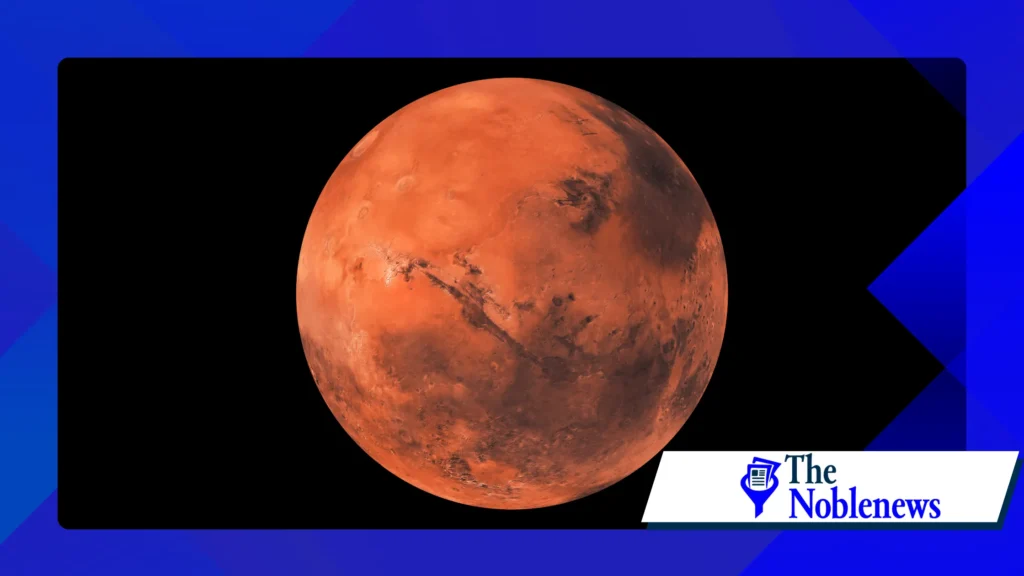
Possibility of a Mars colony. Mars calls to us as a potential second home, a critical backup plan for our species.

Planetary protection dictates diversification, securing the long-term survival of human civilization. This ultimate objective drives vast governmental and private investment.

We view the colonization as a marathon, not a sprint, demanding sustained technological and financial commitment.

The underlying principle is simple: where there is a will, groundbreaking engineering solutions emerge.

Navigating the Core Scientific Hurdles

Establishing a permanent human settlement on the Red Planet presents severe, complex scientific challenges.

広告

These hurdles span everything from biology and medicine to material science and aerospace engineering. Overcoming them requires ingenuity and collaboration across all disciplines.

Radiation Shielding and Human Health

The most immediate and existential threat to any crew is the relentless cosmic and solar radiation.

Mars lacks Earth’s thick atmosphere and protective global magnetic field, leaving settlers vulnerable.

広告

Long-term exposure significantly increases cancer risk and poses neurological dangers.

Designing effective, lightweight, and permanent radiation shielding remains a monumental task for mission planners.

続きを読む: 昨年の最もエキサイティングな宇宙の発見

One original example involves utilizing Mars’ own regolith, the surface soil, as a building material. Structures could be partially or entirely subterranean, providing passive protection.

Studies by NASA and others consistently highlight the radiation risk.

The Mars Science Laboratory’s Radiation Assessment Detector (RAD) measured a crucial piece of data: the average daily surface dose is approximately 0.64 millisieverts (mSv).

This makes continuous, active shielding non-negotiable.

LocationTypical Annual Radiation Dose (mSv)Shielding Requirement
Earth Sea Level∼ 2.4Minimal
International Space Station (ISS)∼ 150適度
Mars Surface (Unshielded)∼ 230高い
Deep Space Travel>∼ 300Extreme

This table clearly illustrates the magnitude of the difference between Earth and the Martian surface environment.

The accumulated dose on Mars is far greater than acceptable terrestrial limits.

possibility of a Mars colony
Possibility of a Mars colony

Self-Sufficiency and Resource Utilization

Sustaining life thousands of miles from Earth requires total self-sufficiency, known as In-Situ Resource Utilization (ISRU).

Colonists cannot indefinitely rely on expensive, timely resupply missions from their home planet.

The Martian atmosphere is over 95% carbon dioxide (CO2​). Ingeniously, engineers plan to use this abundant gas to produce crucial oxygen and rocket propellant.

こちらをお読みください: 3×3ルール:朝のウェルネストレンド

その MOXIE experiment on the Perseverance rover successfully demonstrated this feasibility on a small scale.

A second, vital original example involves closed-loop ecological systems. Imagine a sophisticated, bio-regenerative Martian farm, BioHome I.

This sealed environment constantly recycles water, air, and organic waste, mimicking a miniature, isolated Earth.

This challenge is like trying to build a complex, integrated ecosystem inside a thermos bottle while hiking in the Sahara Desert.

Every component must function perfectly and depend on local, minimal inputs.

Engineering the Martian Future

The engineering solutions are rapidly moving from theoretical blueprints to tangible prototypes.

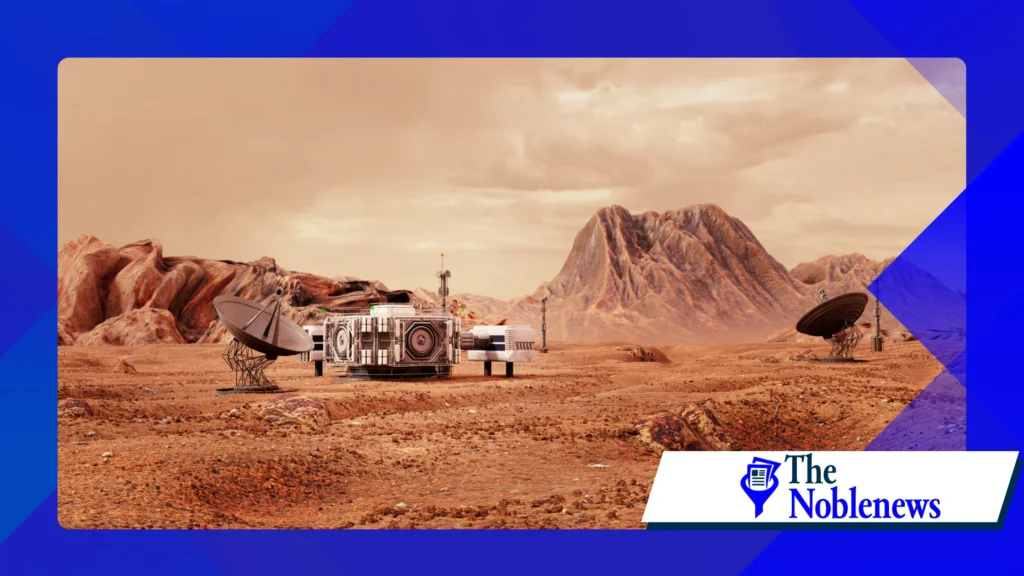
Teams are developing technologies to make the possibility of a Mars colony a near-term reality.

Building and Powering the Habitat

Advanced additive manufacturing (3D printing) technologies are essential for construction using local Martian materials.

Autonomous robots could pre-build crucial infrastructure before the first human crew even arrives. This reduces the initial mission’s mass requirement.

++ VR酔いが未だに蔓延する理由と開発者の解決策

Power generation will rely heavily on advanced solar arrays or small, portable nuclear fission reactors. Reliable, continuous power is necessary to run the ISRU units, life support systems, and communication equipment.

Statistically, more than 70% of all mass launched to Mars is typically propellant and life-support consumables.

ISRU technologies aim to slash this number dramatically, making missions affordable. The successful implementation of ISRU is what defines the transition from temporary outpost to a genuine colony.

The Human Factor possibility of a Mars colony

Beyond the hardware, the psychological challenge of isolation is profound.

Crews must be meticulously selected and trained for resilience, teamwork, and long-duration confinement. They need to become the ultimate problem-solvers.

Furthermore, terraforming, or gradually altering the Martian environment to make it more Earth-like, remains a long-term goal.

The sheer scale makes it a project spanning centuries, not decades, securing the possibility of a Mars colony for future generations.

possibility of a Mars colony
Possibility of a Mars colony

The Audacity of Ambition possibility of a Mars colony

We stand at a unique juncture where the dream of a permanent human presence is merging with scientific capability.

The enormous capital and intellectual investment signal serious intent, moving us beyond simple science fiction. This enterprise is the ultimate test of human perseverance.

The challenges are monumental, but human history shows our species thrives on overcoming limits.

The complex, integrated solutions for radiation, life support, and material science are steadily falling into place.

Will the next generation look back and see the establishment of the possibility of a Mars colony as the moment humanity finally matured?

よくある質問

How long would a typical trip to Mars take?

Current estimates for a one-way trip, leveraging optimal orbital mechanics (a “Hohmann transfer window”), are approximately seven to nine months.

The duration is heavily dependent on the available propulsion technology.

What is the gravity on Mars?

The surface gravity on Mars is about 38% of Earth’s gravity. The long-term effects of this reduced gravity on human physiology, especially bone density and vision, remain a significant area of research.

When will the first crewed mission to Mars launch?

Multiple private and governmental agencies aim for the late 2030s or early 2040s for the first sustained crewed landing.

The establishment of a permanent, sustainable colony follows that initial landing.

Why is an atmosphere so important for a permanent settlement?

An atmosphere provides a level of pressure needed for liquid water to exist on the surface and offers some minor protection against micrometeoroids and radiation.

Earth’s atmosphere is a thick, protective blanket; Mars’ is a thin veil.

What is the most promising location for a colony?

Areas with confirmed subsurface ice, such as the mid-latitudes, are highly favored.

Access to water is non-negotiable for drinking, oxygen production, and potential rocket fuel generation, making the possibility of a Mars colony dependent on water ice.

How often does the Earth-Mars transfer window open?

The optimal alignment for a minimum-energy transfer (Hohmann window) occurs approximately every 26 months.

Missing this launch window significantly increases the mission time and fuel requirement, affecting the possibility of a Mars colony.

Is the cost of a colony feasible?

While the initial investment is astronomical, proponents argue the long-term returns in technological spin-offs, planetary resource access, and the ultimate insurance policy for humanity make the possibility of a Mars colony a justifiable expense.

++ Exploring the viability of self-sustaining Mars colonies as a solution to climate

++ Mars Exploration Science Goals

\
トレンド