
Por que as progressões de força com o próprio peso corporal continuam sendo altamente eficazes
Anúncios
Masterização bodyweight strength progressions allows individuals of all fitness levels to build functional muscle, increase joint stability, and cultivate real-world relative strength without requiring expensive gym equipment.
While many fitness enthusiasts assume that building significant strength demands heavy iron plates and specialized machines, progressive calisthenics relies on the exact same biomechanical rules that govern traditional weightlifting: mechanical tension and progressive overload.
By systematically altering leverage, joint angles, tempo, and range of motion, bodyweight exercises can continuously challenge muscles, spark growth, and deliver long-term athletic development.
Principais conclusões
- Progressive Overload Without Iron: Bodyweight strength training relies on altering leverage, limb positioning, and range of motion to continually increase resistance rather than adding external weight.
- Superior Joint and Kinetic Integration: Multi-joint bodyweight movements strengthen stabilization muscles, increase connective tissue resilience, and build functional strength across full ranges of motion.
- Scalable for Every Fitness Level: By applying systematic exercise progressions, a simple movement like a push-up or squat can scale seamlessly from absolute beginners to elite athletes.
- High Accessibility and Consistency: Removing the barrier of specialized equipment makes workouts highly sustainable, promoting long-term consistency and long-term athletic success.
The Biomechanics of Bodyweight Strength Progressions
At its core, muscle tissue cannot distinguish between a metal barbell and the pull of gravity on your own body.
Skeletal muscle responds directly to mechanical tension, metabolic stress, and muscle damage. When you perform resistance training, motor units within the muscle fibers fire to overcome the load.
To make an exercise harder using external loads, you simply add weight plates. In progressive bodyweight training, you achieve the same mechanical challenge by manipulating physics.
Altering Leverage and Torque
The most effective way to modify resistance in calisthenics is by changing the lever arm relative to the target joint.
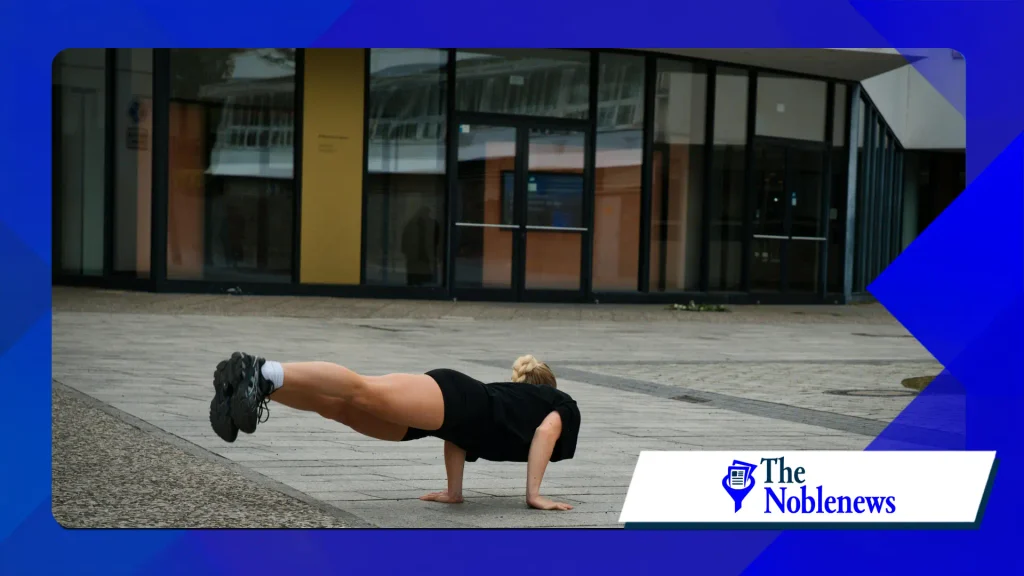
When you perform a standard push-up on hands and toes, your body acts as a plank, distributing a percentage of your total body weight across your upper body.
Elevating your hands onto a bench shortens the angle and reduces the load, making the movement easier.
Conversely, elevating your feet onto a box shifts a higher percentage of your body mass onto the shoulders and chest.
Moving toward unilateral variations—such as shifting weight toward a single arm in an archer push-up—drastically increases torque on the active joints, requiring significantly more neural drive and muscular force.
Range of Motion and Tempo Manipulation
Adjusting the distance a joint travels during an exercise profoundly impacts muscular activation.
Deep bodyweight squats or full-range dips recruit more muscle fibers at longer muscle lengths, which is critical for both hypertrophy and strength.
Furthermore, controlling exercise tempo—such as lowering slowly over three to four seconds during the eccentric phase—increases total time under tension.
Leia mais: O crescimento do interesse em atividades físicas de fim de semana entre profissionais
Increased tension stimulates adaptation without adding external load, making tempo control a crucial tool in progressive bodyweight protocols.
Essential Push, Pull, and Leg Progression Pathways
To build a balanced, resilient body using bodyweight training, exercises should be organized into fundamental movement patterns: horizontal pushing, vertical pushing, horizontal pulling, vertical pulling, and lower-body patterns.
++ Por que a corrida em trilha atrai ex-frequentadores de academia?
Progression pathways systematically advance from foundational movements to advanced variations.
Horizontal and Vertical Pushing Progressions
Pushing movements develop the chest, anterior deltoids, and triceps while training core stability.
Wall or Incline Push-Up: Reduces gravitational force, ideal for establishing baseline shoulder stability and core bracing.
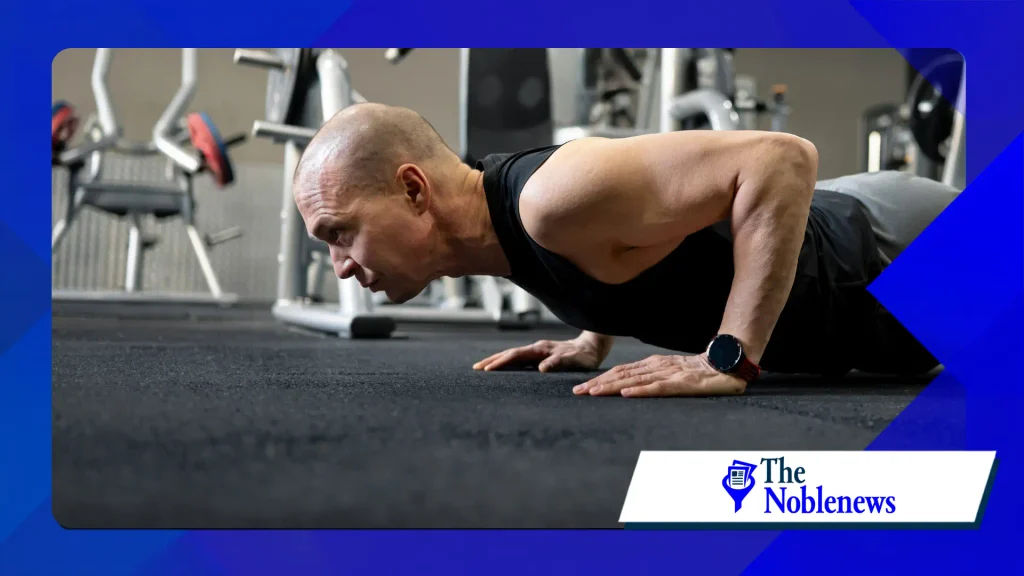
Standard Floor Push-Up: Demands full-body tension, requiring control of approximately 60% to 70% of total body mass.
Diamond or Close-Grip Push-Up: Shifts mechanical emphasis to the triceps and inner chest by narrowing the base of support.
Archer or Single-Arm Assisted Push-Up: Introduces unilateral load, forcing one side of the body to bear the majority of the weight.
++ Como os aplicativos de venda de ingressos digitais estão transformando eventos ao vivo
Elevated Pike Push-Up / Handstand Push-Up: Shifts the vector from horizontal to vertical, targeting the shoulders and upper chest.
Vertical and Horizontal Pulling Progressions
Pulling exercises target the latissimus dorsi, rhomboids, posterior deltoids, and biceps. They are vital for postural alignment and shoulder health.
Incline Bodyweight Row (TRX or Bar): Allows beginner trainees to row a fraction of their body weight with fully supported feet.
Horizontal Incline Row: Positioned lower to the floor, increasing resistance against gravity.
Chin-Up / Pull-Up Eccentrics: Emphasizes controlled lowering from the top position to build grip and back strength.
Strict Dead-Hang Pull-Up: Requires pulling full body weight from a dead stop, eliminating momentum.
Archer Pull-Up / L-Sit Pull-Up: Adds unilateral tension or core compression demands to maximize muscular engagement.
Lower-Body Strength Pathways
Because the legs carry our body weight daily, bodyweight leg progressions rely heavily on single-leg balance, range of motion, and explosive power output.
- Air Squat / Assisted Reverse Lunge: Establishes ankle and hip mobility while building foundational leg stamina.
- Step-Up / Elevated Reverse Lunge: Focuses weight on a single leg while stabilizing through the knee and hip.
- Bulgarian Split Squat: Isolates the quadriceps and glutes while stretching the hip flexors of the rear leg.
- Shrimp Squat / Cossack Squat: Challenges lateral hip stability, ankle dorsiflexion, and single-leg force production.
- Pistol Squat (Single-Leg Full Squat): Requires deep knee flexion, significant hip flexor strength, and ankle mobility to execute safely.
Comparing Bodyweight Progressions to External Resistance
Understanding how bodyweight progressions compare to traditional resistance methods helps trainees integrate both approaches effectively.
| Training Parameter | Bodyweight Progressions | Traditional Weightlifting |
| Progressive Overload Mechanism | Altering leverage, tempo, range of motion, and balance demands. | Adding load via weight plates, dumbbells, or machine stacks. |
| Joint Stability & Core Demands | Very high; requires full-body tension and active stabilization. | Variable; high in compound lifts, low in isolated machine exercises. |
| Equipment Requirements | Minimal (pull-up bar, floor space, optional suspension trainer). | High (barbells, rack, plates, dumbbells, specialized machinery). |
| Skill Acquisition & Neural Motor Control | High; requires body awareness, coordination, and spatial balance. | Moderate to High; focuses heavily on path control and load balance. |
| Scalability for Hypertrophy | High, though technical skill can become a limiting factor at advanced levels. | Straightforward; load increases easily without requiring complex skill shifts. |
Practical Application: Structuring a Progressive Bodyweight Routine
To maximize results from bodyweight strength progressions, programs should follow structured principles of frequency, volume, and recovery.
Frequency and Volume Guidelines
Training Frequency: 3 to 4 sessions per week, allowing 48 hours of recovery between working the same muscle groups.
Set & Rep Ranges: For absolute strength development, choose exercise variations where failure occurs between 5 and 8 repetitions.
For muscle hypertrophy, select variations allowing 8 to 15 reps with proper technique.
Rest Periods: Rest 2 to 3 minutes between intense progression sets to allow the nervous system and ATP stores to recover fully.
Systematic Overload Checklist
Before advancing to a harder exercise variation, ensure you meet the following baseline criteria:
- [ ] Perform 3 clean sets of the upper rep threshold (e.g., 3 sets of 12 reps) with full range of motion.
- [ ] Maintain strict core alignment without lower back sagging or compensation.
- [ ] Control the eccentric (lowering) phase for at least 2 seconds on every repetition.
- [ ] Experience no joint pain or discomfort during or after the sets.
Common Pitfalls and How to Avoid Them
While bodyweight progressions are extraordinarily safe and effective, trainees often encounter specific roadblocks that stall progress.
1. Skipping Foundational Levels
Attempting advanced variations—such as pistol squats or handstand push-ups—without building structural strength in basic variations often leads to connective tissue strain.
Always master the basics before modifying leverage. Joint adaptation takes longer than muscle growth, so give tendons and ligaments time to adjust to increased torque.
2. Sacrificing Range of Motion for Reps
Performing “half-reps” artificially boosts repetition counts while reducing muscle fiber recruitment and tendon conditioning.
A full-range chest-to-bar pull-up builds substantially more functional strength than multiple shallow chin-above-bar reps.
3. Neglecting Lower-Body Overload
Because lower-body muscles are large and accustomed to carrying body weight, trainees often move to high-rep endurance sets rather than seeking true strength progressions.
To keep building leg power, prioritize single-leg variations, pause reps, and explosive concentric movements rather than merely doing hundreds of standard air squats.

Perguntas frequentes
Can you build significant muscle mass using only bodyweight strength progressions?
Yes. Muscle hypertrophy is driven by mechanical tension, volume, and progressive overload.
As long as you select exercise progressions that challenge your muscles within the appropriate hypertrophy rep range (6 to 15 reps) and continually increase difficulty as you get stronger, you can stimulate substantial muscle growth without external weights.
How do I know when it is time to move to a harder exercise variation?
You should advance to a harder variation once you can comfortably complete all targeted sets and reps (for example, 3 sets of 12 reps) with strict form, controlled tempo, and zero momentum.
If your form degrades on harder variations, return to the previous level and add tempo pauses or extra volume.
Are bodyweight progressions safer for joints than barbell lifting?
Bodyweight movements generally allow joints to move along natural paths of motion, which can reduce unnatural strain on elbows, shoulders, and wrists.
However, advanced bodyweight variations introduce high torque on connective tissue. Proper warm-ups, adequate rest, and gradual progression are necessary regardless of the resistance tool used.
Next Steps for Your Training
To incorporate bodyweight strength progressions into your routine, start by assessing your current baseline strength across pushing, pulling, and lower-body movements.
Select variations that allow you to perform clean, controlled repetitions with proper form.
Focus on incremental improvements—adding a single rep, slowing down your lowering phase, or improving your range of motion—before jumping to a harder exercise variation.
Consistency and attention to movement quality remain the key drivers of long-term strength.
++ Is Bodyweight Training Effective for Building Muscle?
++ Strength Training for Beginners: Why Bodyweight Exercises Aren’t Enough in the Long Run
\