
Why high altitude balloon science expands atmospheric research
Anúncios
High altitude balloon science plays a vital role in advancing atmospheric research by capturing ultra-precise, in-situ data directly from Earth’s stratosphere.
While satellites observe Earth from hundreds of miles away in space and aircraft remain constrained to the troposphere, scientific balloons operate in the near-space region between 60,000 and 120,000 feet.
This unique positioning fills a long-standing observation gap, enabling atmospheric scientists, climate researchers, and astrophysicists to collect high-resolution data at a fraction of the cost of orbital missions.
Principais conclusões
- Targeted Middle-Atmosphere Access: Scientific balloons reach altitudes between 18 and 40 kilometers, allowing direct sampling of the stratosphere where weather planes cannot fly and satellites cannot easily measure fine-scale details.
- Unmatched Cost Efficiency: Delivering scientific payloads into near-space via high altitude balloon flights costs significantly less than launching orbital satellites, accelerating development cycles for new sensor technologies.
- Real-Time Data Accuracy: High altitude balloons carry sensitive radiosondes and specialized spectrometer payloads that measure trace gases, greenhouse gas profiles, ozone depletion, and solar radiation with exceptional spatial resolution.
- Essential Calibration Ground Work: Near-space scientific balloon observations supply the critical ground-truth data necessary to validate and calibrate global satellite monitoring systems.
The Stratospheric Gap: Why Satellites and Aircraft Are Not Enough
Atmospheric science relies heavily on continuous observations across different layers of the sky.
For decades, ground stations, weather radar, and commercial or research aircraft have monitored the troposphere—the lowest atmospheric layer where weather occurs.
Meanwhile, polar-orbiting and geostationary satellites monitor Earth from low Earth orbit (LEO) and beyond.
However, this creates a major observational boundary in the stratosphere. Standard scientific research aircraft top out around 45,000 to 50,000 feet due to thinning air density.
Conversely, satellites orbit hundreds of miles above the planet, looking down through dense atmospheric layers.
Remote satellite sensors often struggle to isolate fine-scale vertical profiles of chemical species, local turbulence, and subtle temperature gradients within specific stratospheric layers.
High altitude balloons bridge this observational divide. Floating in the stable, thin air of the stratosphere, these research platforms linger in target zones for hours or weeks.
This loitering capability gives atmospheric scientists uninterrupted, direct access to the exact chemical and thermodynamic processes shaping Earth’s climate system.
How High Altitude Balloon Science Advances Atmospheric Research
The expansion of high altitude balloon science impacts multiple domains of atmospheric and Earth system science.
By lifting heavy, complex instrument suites into near-space, researchers capture measurements that were once technically or financially impossible.
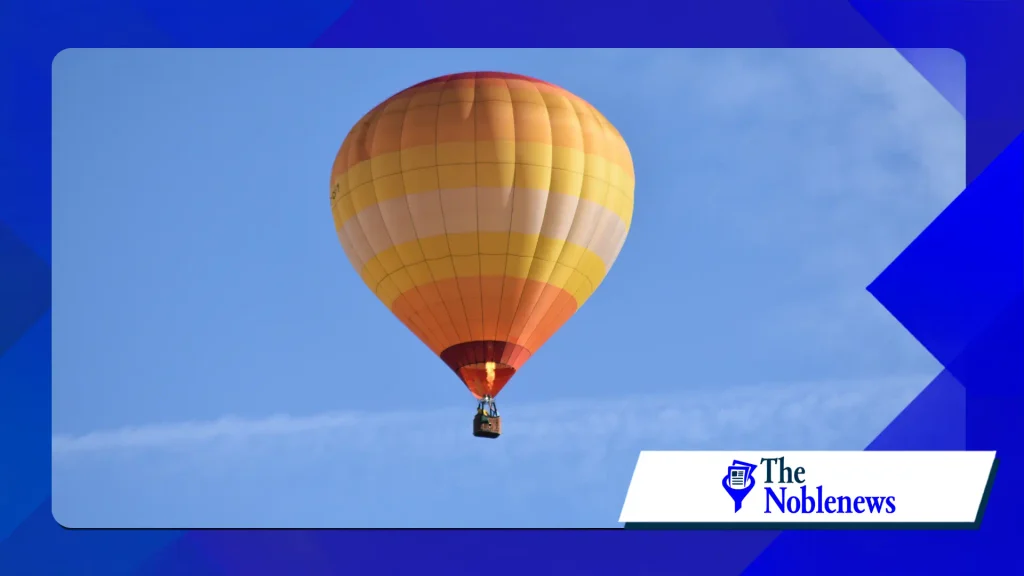
1. Direct Sampling of Stratospheric Chemistry and Aerosols
Understanding climate change and atmospheric dynamics requires accurate measurements of greenhouse gases, volcanic aerosols, and trace chemicals.
++ Por que os depósitos de hidrato de metano são importantes para as necessidades energéticas futuras?
High altitude balloons carry specialized instruments—such as frost-point hygrometers, ozone photometers, and laser spectrometers—that directly sample ambient air.
- Ozone Layer Recovery: High-altitude instruments trace volatile chlorine and nitrogen compounds in real time, helping scientists monitor the ongoing recovery of the stratospheric ozone layer.
- Aerosol Transport: Following major volcanic eruptions or large-scale wildfire events, zero-pressure balloons capture samples of injected ash and sulfate aerosols, revealing how these particles reflect incoming solar radiation and cool the planet’s surface.
- Water Vapor Dynamics: Stratospheric water vapor acts as a potent greenhouse gas. Near-space balloon soundings measure extremely low moisture concentrations with precision that optical satellite instruments cannot match.
2. Validating and Calibrating Satellite Data
Satellite sensors undergo harsh conditions during launch and gradually degrade over time in space orbit.
To ensure that remote sensing satellites deliver reliable global data, space agencies rely on atmospheric research balloons for ground-truth validation.
When a satellite passes overhead, research teams launch scientific balloons simultaneously beneath the orbital track.
The balloon measures atmospheric density, temperature profiles, and radiometer signals along the exact vertical line of sight.
Scientists then cross-reference the balloon’s direct physical samples against the satellite’s remote calculations to eliminate measurement drift and sensor bias.
For detailed information on flight manifests, payload capabilities, and global mission operations, review the official guidance from the NASA Scientific Balloon Program.
3. Testing Next-Generation Aerospace Technologies
Building spaceflight-qualified hardware is expensive and time-consuming.
High altitude balloons serve as an ideal, low-risk testing ground for cutting-edge atmospheric sensors, optical telescopes, and planetary exploration tools.
At float altitudes above 100,000 feet, instruments experience conditions strikingly similar to the surface of Mars or the upper atmosphere of Venus: near-vacuum pressures, extreme cold, and high radiation levels.
Leia mais: A Busca por Mundos Habitáveis Além do Nosso Sistema Solar em 2026
Engineers test lightweight solar panels, star-trackers, atmospheric spectrometers, and pointing systems on balloon missions before committing them to multi-million-dollar space missions.
Comparative Analysis of Atmospheric Observation Platforms
Selecting the appropriate observation platform depends on research goals, payload weight, operational altitude, and budget constraints.
++ Como o FPGA MiSTer está mudando o futuro da precisão em jogos retrô.
The following table compares primary scientific observation platforms used across atmospheric research.
| Observation Platform | Typical Operational Altitude | Primary Strengths | Main Limitations | Cost Profile |
| Research Aircraft | Surface to 45,000 ft (14 km) | Active pilot control, high payload capacity, flexible flight path adjustments | Flight duration limited to hours; cannot reach the upper stratosphere | High hourly operating costs |
| High Altitude Balloons | 60,000 to 120,000+ ft (18–40 km) | Direct stratospheric sampling, low vibration, extended float times, rapid deployment | Flight paths subject to wind currents; payload recovery required | Moderate (Highly cost-effective) |
| Sounding Rockets | 30 to 900+ miles (50–1,500 km) | Reaches mesosphere and thermosphere; rapid vertical profile data | Extremely short observation window (minutes); high acceleration forces | High cost per minute of data |
| LEO Satellites | 100 to 1,200 miles (160–2,000 km) | Continuous global coverage, long-term monitoring over years | Remote sensing limitations, fixed orbit tracks, high launch failure impact | Very high initial investment |
Core Types of Scientific Balloons Used in Research
Researchers select balloon designs based on mission objectives, weight requirements, and target flight durations.
The two dominant categories in modern atmospheric science are zero-pressure balloons and superpressure balloons.
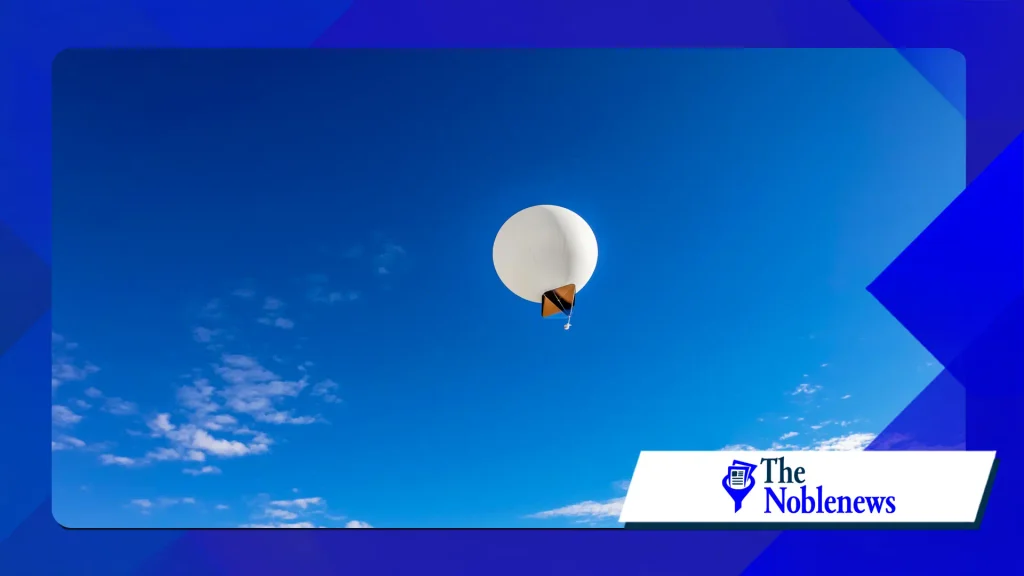
Zero-Pressure Balloons
Zero-pressure balloons feature open ducts at the base to vent expanding helium or hydrogen gas as the balloon climbs.
Because internal pressure equals the surrounding atmospheric pressure, these balloons expand significantly at high altitudes.
- Melhor para: Heavy scientific payloads weighing up to several thousand pounds.
- Duration: Typically 1 to 4 days.
- Operational Dynamics: During the day, solar heating causes the lifting gas to expand and vent. At night, cooling gas contracts, causing the balloon to lose lift unless ballast (such as steel shot) is released.
Superpressure Balloons
Superpressure balloons are fully sealed structures built with high-strength, non-stretch synthetic films. As the internal gas heats during the day, pressure increases inside the envelope without expanding its volume or venting gas.
- Melhor para: Ultra-long-duration flights requiring stable float altitudes across daylight and night cycles.
- Duration: Weeks to months.
- Operational Dynamics: By maintaining constant volume, superpressure balloons fly along constant density surfaces (isopycnic levels), enabling long-term tracking of global stratospheric winds, atmospheric waves, and continent-spanning chemical transport patterns.
To explore how nationwide atmospheric soundings improve daily weather forecasting models, consult the National Weather Service Radiosonde Observations Guide.
Practical Considerations for Executing High Altitude Balloon Missions
Launching a successful high altitude scientific balloon requires thorough planning across engineering, meteorological, and regulatory requirements.
Navigating FAA Regulatory Clearances
In the United States, scientific balloon launches must strictly comply with Federal Aviation Administration (FAA) regulations under 14 CFR Part 101. Key requirements include:
Airspace Notification: Teams must issue a Notice to Air Missions (NOTAM) before launch to alert civilian and commercial pilots.
Air Traffic Control (ATC) Tracking: Operations require direct coordination with local ATC facilities to monitor the balloon as it ascends through commercial flight corridors.
Safety Systems: Payloads over specific weight limits must carry radar reflectors, dual-redundant flight termination systems, and certified parachutes to ensure safe descent away from populated areas.
Environmental Hazards in Near-Space
Stratospheric flight subjects sensitive electronics and scientific sensors to harsh environmental stress:
Thermal Extremes: Temperatures drop below -60°C (-76°F) in the upper troposphere before rising slightly in the stratosphere. Custom thermal enclosures and insulation are necessary to prevent battery failure.
Low Pressure Environments: At 100,000 feet, air pressure drops below 10 millibars. Unsealed electronics can arcing-discharge, and fluid systems can boil rapidly without pressure containment.
Payload Recovery: Because floating payloads drift downwind across hundreds of miles, flight teams rely on satellite telemetry (such as Iridium networks), GPS tracking, and radio direction-finding to locate and recover scientific instruments after parachute landing.

Conclusão
High altitude balloon science remains an indispensable tool for modern atmospheric research.
By providing low-cost, direct access to the stratosphere, scientific balloons enable researchers to capture precise chemical measurements, calibrate satellite networks, and test emerging aerospace technology.
As global focus turns toward understanding complex climate interactions and atmospheric dynamics, high altitude balloon platforms will continue to expand our view of Earth’s atmosphere.
Perguntas frequentes
What altitude do scientific high altitude balloons reach?
Most scientific balloons ascend to float altitudes between 60,000 and 120,000 feet (roughly 18 to 37 kilometers), well above commercial airline traffic and deep within Earth’s stratosphere.
Specialized light-payload balloons can occasionally exceed 130,000 feet.
How do high altitude balloons stay aloft without an engine?
Balloons rely entirely on buoyancy principles. Filled with lifting gases lighter than ambient air—typically helium or hydrogen—the balloon ascends until its total mass matches the density of the surrounding stratospheric air, reaching a stable equilibrium float altitude.
What happens to a scientific balloon payload after the flight finishes?
Once a mission completes its observation objectives, flight controllers send an encrypted radio signal to activate a flight termination unit.
This mechanism separates the instrument payload from the balloon envelope and deploys a parachute, bringing the scientific equipment safely back to the ground for recovery and reuse.
How do weather balloons differ from scientific research balloons?
Standard weather balloons (radiosondes) are smaller latex spheres released twice daily to gather routine temperature, humidity, pressure, and wind speed data for weather models.
Scientific research balloons are significantly larger, carrying heavy, specialized sensor arrays for extended atmospheric, astronomical, or technology-validation experiments.
++ How it Works: The Science and Engineering Behind High-Altitude Balloons
++ High-Altitude Balloons Aren’t Just for Spying. Here’s How Scientists Use Them
\