
Recent Advances in Artificial Organs and Prosthetics
Anúncios
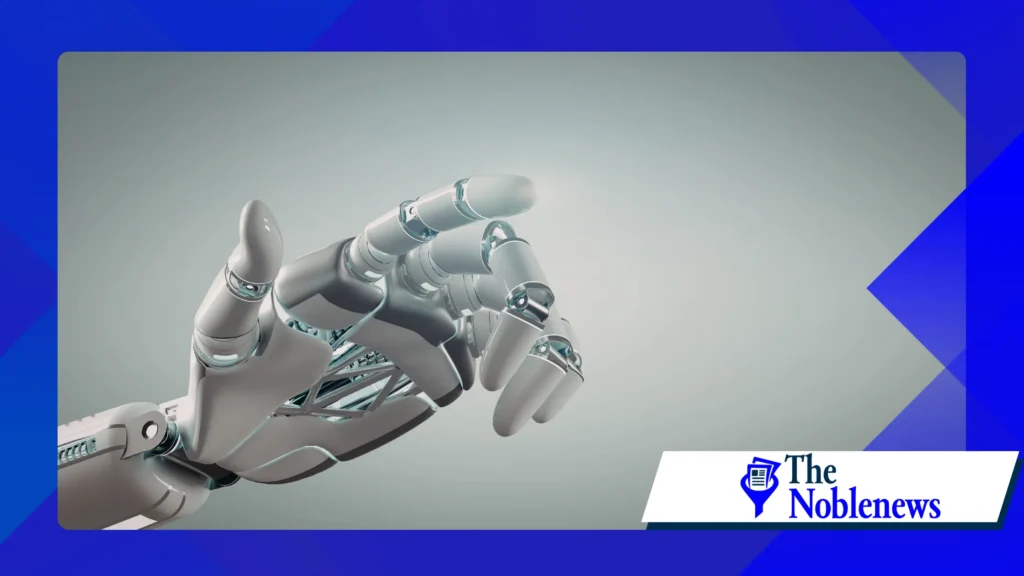
Recent Advances in Artificial Organs and Prosthetics represent a monumental leap in medical engineering, merging biological systems with sophisticated digital interfaces to restore human function.
Inside This Evolution
- The blurring lines between biology and machinery.
- 3D bioprinting: From lab curiosities to vascular reality.
- Neural interfaces and the quest for artificial “feeling.”
- A cold look at the data: Bionic performance in 2026.
- The socio-economic friction of high-tech healing.
What Are the Latest Breakthroughs in Bio-integrated Systems?
The landscape of regenerative medicine has shifted away from mere “replacement” toward a seamless biological handshake. We are seeing a move toward materials that don’t just sit inside a body but actively converse with it.
Engineers are now deploying biocompatible polymers that invite cellular integration. This isn’t just about avoiding a “foreign body” alert; it’s about creating a permanent, living union that largely renders old-school immunosuppressants obsolete.
These systems rely on sensors that mimic the body’s own frantic, quiet internal adjustments. By reacting to a user’s blood pressure or sudden movement, the organ ceases to be a tool and starts behaving like an original part.
How Does 3D Bioprinting Enhance Artificial Organ Viability?
We have finally moved past the era where 3D bioprinting was just a flashy headline. Today, the focus is on the “plumbing”—the intricate, microscopic vascular networks that keep a printed organ from dying on the table.
Anúncios
Precision at this scale is almost haunting. By layering bio-ink with a cell-by-cell accuracy, we can now replicate the capillary beds that were once considered too complex for human manufacturing to mimic.
This shift transforms the transplant waiting list from a death sentence into a manufacturing queue. When a patient receives a graft grown from their own genetic blueprint, the very concept of “rejection” begins to evaporate from the medical lexicon.
Why Are Neural Interfaces Revolutionizing Modern Prosthetic Limbs?
The true frontier of prosthetics isn’t movement; it’s sensation. Until recently, a prosthetic arm was a silent partner, but modern neural interfaces have finally started talking back to the brain.
Anúncios
By wiring sensors directly into the peripheral nervous system, we allow users to distinguish between the cold hardness of a glass and the soft give of a hand. It’s a sensory feedback loop that makes a limb feel “owned” rather than “worn.”
Artificial intelligence acts as the silent translator here. It decodes the messy, electric chatter of our nerves into fluid mechanical gestures, learning the specific tics and habits of the wearer through constant repetition.
Which Technologies Drive the Development of Synthetic Kidneys?
The grueling routine of traditional dialysis is slowly being disrupted by the arrival of wearable, and now implantable, synthetic kidneys. These devices rely on silicon nanopore filters that act as high-efficiency sieves for the blood.
Unlike the violent “flush and fill” cycle of stationary dialysis, these systems offer a continuous, gentle purification. It’s a much more faithful recreation of how a biological kidney actually manages toxins throughout the day.
Miniaturization has reached a point where these units can be tucked away internally. They are powered by the body’s own hemodynamics, cleverly using the heart’s rhythm to drive filtration instead of relying on external batteries.
According to research highlights from The Lancet, these specific developments are fundamentally altering the life expectancy and daily dignity of patients facing end-stage renal failure.

Current Capabilities: A 2026 Performance Snapshot
| Technology | Primary Function | Key 2026 Advancement | Expected Lifespan |
| Bionic Heart | Circulation | Wireless Maglev flow | 15+ Years |
| Bio-Spleen | Sepsis Control | Magnetic pathogen capture | Acute Use |
| Retinal Implant | Vision | Direct neural bypass | 10+ Years |
| Myoelectric Arm | Motor Control | Tactile pressure sensing | 8+ Years |
What Are the Economic Impacts of Advanced Prosthetics?
There is a frequent misunderstanding that high-tech prosthetics are a drain on resources. In reality, restoring a person’s autonomy is the ultimate cost-saving measure for any healthcare system.
When an individual can return to the workforce without a caregiver, the economic ripple effect is massive. We are transitioning from a model of “managing disability” to one of “re-establishing full human agency.”
++ The Most Promising Renewable Energy Sources in 2026
Insurance providers are slowly waking up to this math. They are beginning to see that a $50,000 bionic intervention is significantly cheaper than forty years of assisted living and chronic secondary complications.
When Will Fully Autonomous Artificial Hearts Become Standard?
Total Artificial Hearts (TAH) have finally cut the cord. The most significant leap recently has been the perfection of transcutaneous energy transfer, allowing these pumps to charge through the skin.
The freedom this provides is psychological as much as it is physical. Patients in current clinical trials are swimming and running without the constant, buzzing reminder of an external power pack or a “driveline” exit wound.
Read more: Deep-Ocean AI Drones
Standardization is no longer a question of “if,” but of how fast we can scale. As manufacturing techniques stabilize, these hearts will move from experimental centers into the hands of general cardiac surgeons.
How Do Smart Materials Improve Prosthetic Comfort? Recent Advances in Artificial Organs and Prosthetics
A prosthetic is only as good as its socket. New “adaptive” materials solve the age-old problem of the residual limb changing shape and volume throughout a hot or active day.
Temperature management has also undergone a quiet revolution. We are seeing phase-change materials that absorb excess heat, preventing the sweat and skin breakdown that used to make long-term prosthetic use a painful chore.
++ The Dark Side of Mobile Apps: Data Collection and Surveillance
These materials also act as a sophisticated suspension system. By dampening the impact of every step, they protect the wearer’s remaining joints from the uneven wear and tear that often leads to secondary arthritis.
What Are the Ethical Challenges of Enhancing Human Function?
As we refine these technologies, we run into an unsettling question: where does therapy end and enhancement begin? There is a legitimate fear that we are creating a two-tiered biological class system.
Regulatory bodies are struggling to keep pace with the tech. The goal must be to ensure that life-saving artificial organs don’t become the exclusive “upgrades” of the ultra-wealthy.
Data privacy has also entered the operating room. Since these devices are often cloud-connected for diagnostic monitoring, the security of a person’s internal “bio-data” is now a matter of national and personal safety.
A Global Perspective on Distribution
The acceleration of these technologies is largely due to a rare moment of global transparency. Research labs are trading neural algorithms and bio-ink recipes with unprecedented speed.
This has allowed for a “decentralized” approach to medicine. We are seeing portable 3D bioprinters being deployed in regions where traditional organ transport would be impossible due to infrastructure or distance.
The focus is shifting toward “frugal innovation”—stripping away the aesthetic bells and whistles to create functional, rugged versions of these devices for use in developing healthcare markets.

Final Reflections on the Bionic Era
The milestones reached in this field represent more than just clever engineering; they are a testament to our refusal to accept biological frailty as a finality. We have entered a period where “broken” is no longer a permanent state for the human body.
The marriage of intelligence and biology is deepening. As we continue to refine how machines speak to our nerves, the distinction between what we were born with and what we have built will continue to fade.
Ultimately, the goal isn’t just to keep people alive, but to keep them whole. The technology is finally catching up to that ambition, turning the sci-fi dreams of the last century into the clinical standard of this one.
For a deeper dive into the clinical trials currently shaping these outcomes, the National Institutes of Health remains the authoritative source for ongoing regenerative research.
FAQ
How long do modern artificial organs last?
Most internal systems, like the latest synthetic kidneys, are now built with a 15-year service life in mind before requiring significant hardware updates.
Can a prosthetic limb really mimic a sense of touch?
Yes. By stimulating specific nerve endings in the residual limb, we can trick the brain into “feeling” sensations that originate in the fingertips of the prosthetic.
Is 3D bioprinting genuinely safe?
Since the process uses the patient’s own genetic material, the risk of immune rejection is nearly zero, making it theoretically safer than a traditional donor transplant.
What is the current price point for a bionic limb?
High-end, neurally-integrated models range from $25,000 to $60,000, though costs are dropping as 3D printing and AI-driven manufacturing become more localized.
Will artificial organs replace donors entirely?
We aren’t there yet, but the trajectory suggests that by the end of the decade, synthetic options will be the first choice for many common organ failures.
Would you like me to develop a specific case study focusing on the long-term psychological impact of neural integration for prosthetic users?
++ Current advancements in the development of bionic organs
++ Recent progress in the field of Artificial Organs
