
Cómo las inspecciones remotas con realidad virtual ahorran tiempo en los lugares de trabajo.
Anuncios
By adopting VR remote inspections, project managers and safety officers can virtually step into a site in real-time, instantly resolving bottlenecks without leaving the office.
Managing multiple construction or industrial job sites traditionally drains hours in transit just to approve a milestone or assess a safety risk.
Conclusiones clave:
- Bypass physical travel completely, reclaiming dozens of hours per week for project managers and specialists.
- Accelerate Request for Information (RFI) resolutions by reviewing spatial 3D context rather than flat, ambiguous photos.
- Streamline regulatory compliance and safety audits without halting active construction work.
- Align architects, engineers, and clients simultaneously in the same digital environment for immediate consensus.
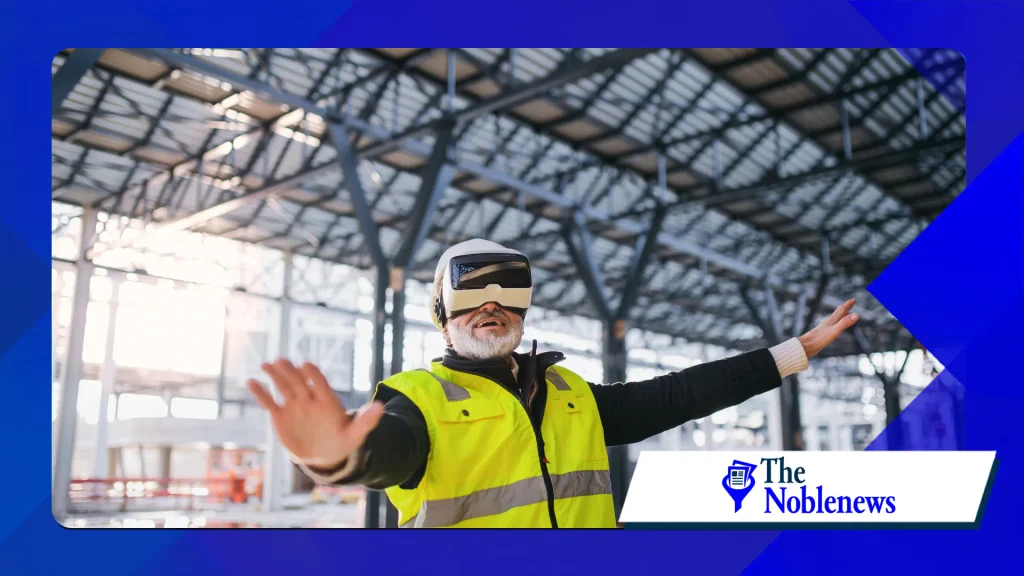
What Are Virtual Reality Site Inspections and How Do They Work?
Teams deploy 360-degree cameras, robotic rovers, or helmet-mounted scanners on the physical job site to capture reality data. High-bandwidth 5G or Wi-Fi 7 networks then stream this visual data to cloud platforms.
Stakeholders in distant offices strap on modern mixed-reality headsets—like the Meta Quest 3 or Apple Vision Pro—to walk through the digital twin of the environment.
Once connected, remote viewers experience the site in true scale. You look up to check ductwork clearances, crouch to inspect plumbing rough-ins, and point out defects using virtual laser pointers.
Field workers communicate with the remote team via two-way audio, moving the camera or scanner to specific areas upon request.
This seamless bridge between the physical dirt and the corporate office transforms how daily operations function.
How Does VR Save Time on the Job Site?
Eliminating commute time stands out as the most obvious efficiency gain.
Regional managers overseeing five different commercial builds across a state previously spent a full workweek just driving between them.
Immersive tech allows that same manager to perform comprehensive walkthroughs of all five sites before lunch.
Decision latency drops dramatically when spatial context replaces 2D photography.
When a field superintendent encounters a structural clash, standard protocol involves snapping pictures, drafting an RFI, and waiting days for an engineer to interpret the flat images.
Virtual environments allow the structural engineer to step directly into the scan, observe the exact depth and scale of the clash, and authorize a workaround in fifteen minutes.
Stakeholders also avoid the logistical nightmare of scheduling concurrent physical visits.
Coordinating an architect, a structural engineer, an MEP (Mechanical, Electrical, and Plumbing) contractor, and the client for a single on-site walkthrough often delays projects by weeks.
++ Cómo las simulaciones industriales de realidad virtual mejoran la planificación de fábricas
Virtual platforms host multiplayer digital rooms where all parties log in simultaneously from different time zones, review the identical spatial data, and make binding decisions on the spot.
Which Tasks Benefit Most from Virtual Walkthroughs?
Quality assurance protocols speed up significantly when specialists handle them remotely.
Concrete pour approvals, rebar inspections, and framing checks require expert eyes but demand very little physical interaction.
Experts verify the work virtually and issue the green light instantly, keeping the critical path moving.
Hazard identification becomes a continuous, frictionless process.
++ El papel de los tutores de IA de realidad virtual en el aprendizaje personalizado
Safety managers conduct daily virtual sweeps to spot missing guardrails or improper scaffolding setups without needing to suit up and physically navigate active, dangerous zones.
Progress tracking shifts from subjective weekly reports to objective, auditable visual milestones.
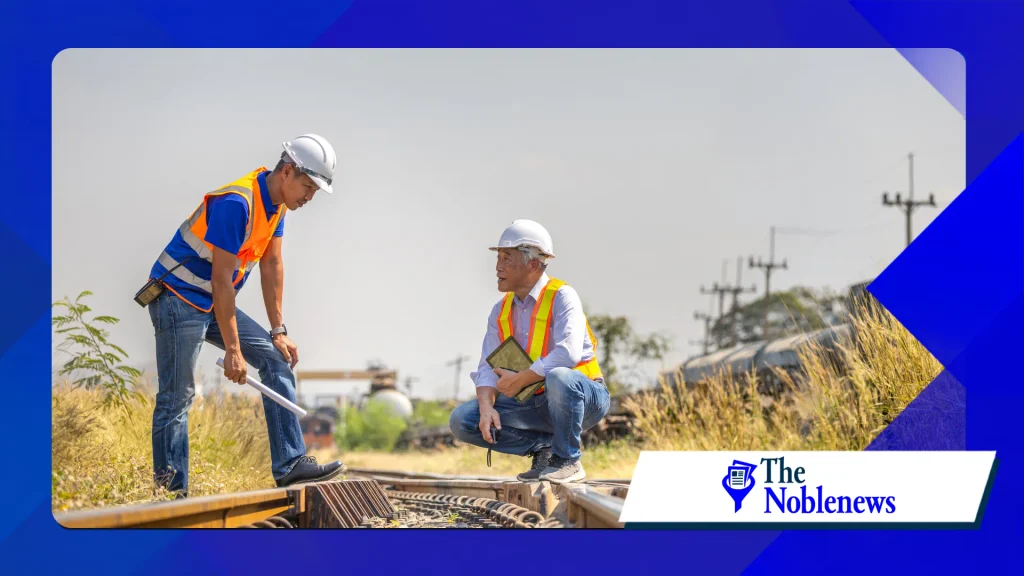
Lenders and clients simply review the 3D capture to release funding tranches, skipping the standard drawn-out site tour and presentation meetings.
++ Por qué los documentales dominan las plataformas de streaming
| Inspection Task | Método tradicional Tiempo | VR Remote Method Time | Aumento de la eficiencia |
| Routine Safety Audit | 4 hours (includes travel) | 30 minutos | 87% faster |
| RFI Clash Resolution | 3 to 5 business days | 1 to 2 hours | Days saved |
| Client Progress Update | 1 full day (coordination/tour) | 45 minutos | 90% faster |
| MEP Rough-in Approval | 3 hours per site | 20 minutes per site | 88% faster |
Why Are Leading Firms Adopting Virtual Reality for Compliance?
Navigating complex regulatory environments requires airtight documentation and rapid response times. Capturing job sites in 3D creates an immutable, timestamped record of conditions on any given day.
If an inspector questions the depth of a trench or the fireproofing on a steel beam weeks after it gets covered up, project teams simply pull up the virtual environment from that specific date to prove compliance.
Safety directors increasingly rely on immersive walkthroughs to align with strict federal standards.
By reviewing site conditions remotely, companies proactively address issues outlined in OSHA’s hazard recognition guidelines before formal inspectors ever arrive.
Identifying a potential fall hazard virtually allows the team to correct it immediately, preventing both injuries and costly stop-work orders.
Auditable spatial records also accelerate local municipal approvals.
Forward-thinking building departments in major metropolitan areas now accept certified 3D scans and VR walkthroughs for preliminary framing or insulation checks, allowing contractors to close up walls days faster than waiting for an in-person city inspector.
What Hardware and Software Do You Need?
Modern field capture relies on surprisingly lightweight hardware. A standard 360-degree camera mounted on a hard hat automatically maps the site as the superintendent walks their normal route.
For millimeter-accurate measurements, teams deploy terrestrial LiDAR scanners or autonomous robotic dogs equipped with photogrammetry sensors.
Software platforms process this heavy data load in the cloud almost instantly.
These systems overlay the newly captured reality scan directly onto the original BIM (Building Information Modeling) files, highlighting deviations automatically.
Academic institutions deeply involved in construction tech, such as Stanford’s Center for Integrated Facility Engineering (CIFE), consistently demonstrate that integrating reality capture with digital building models drastically reduces project delivery times and rework costs.
Offices only require standard commercial standalone VR headsets and a stable internet connection.
The processing happens remotely, meaning executives do not need expensive, high-end gaming computers to walk through a multi-billion-dollar facility smoothly.
Taking the Next Step
Transitioning to virtual oversight does not require overhauling your entire operational playbook overnight.
Start by equipping one superintendent with a 360-camera and tasking a single remote expert with reviewing the daily captures.
As the immediate time savings on travel and RFI turnarounds become apparent, scale the technology across other active builds to maximize your team’s most valuable asset: time.
Preguntas frecuentes
What internet speed is required for VR remote inspections?
Reliable low-latency connections are crucial. Sites need at least a solid 4G LTE connection for asynchronous 360-photo uploads, while live VR streaming typically requires 5G or high-bandwidth Wi-Fi 6 networks to prevent motion sickness for the remote viewer.
Are VR inspections legally accepted by building inspectors?
Acceptance varies strictly by jurisdiction. While many progressive municipalities allow digital twins for preliminary checks and progress verification, final structural or life-safety sign-offs still generally require an in-person visit from a city official.
Can multiple people join the same virtual inspection?
Yes. Most enterprise platforms support multi-user sessions where avatars representing different stakeholders can inhabit the same 3D scan, talk via spatial audio, and use digital measurement tools collaboratively.
Does this technology replace the on-site superintendent?
No. Virtual environments enhance the field team by bringing expertise to them instantly.
Someone physically present must still manage the personnel, operate the capture hardware, and physically execute the corrections identified during the virtual walkthrough.
Leer más: 5 Benefits of Virtual Inspections
++ 8 ways augmented and mixed reality improves remote collaboration and worker safety
