
How New Lunar Missions Are Expanding Scientific Research
Annonces
New lunar missions are expanding scientific research in ways once thought impossible.
For more than fifty years after the Apollo program ended, direct human and robotic exploration of the Moon slowed to a trickle, yet today a global wave of public space agencies and private aerospace companies is changing that trajectory.
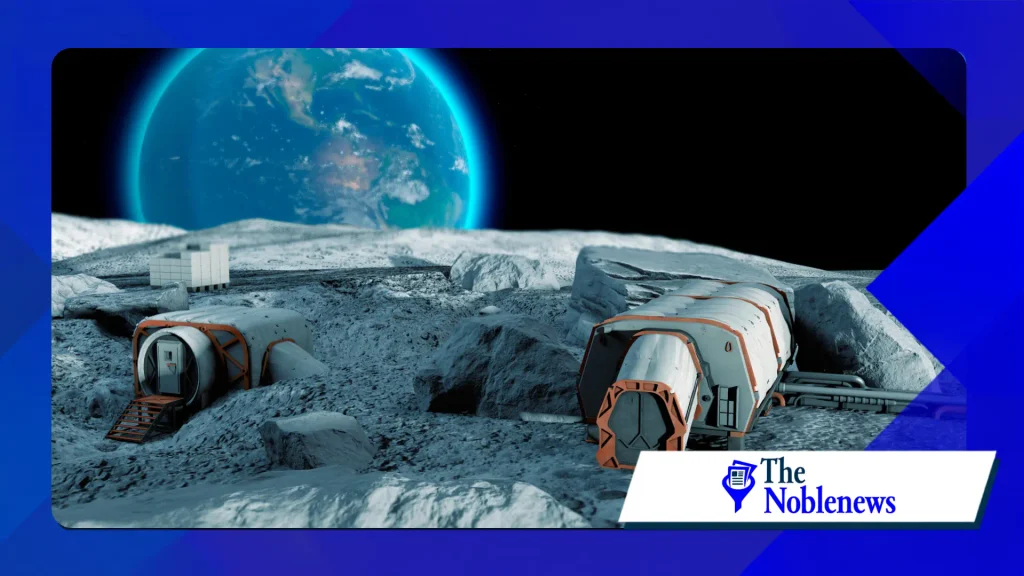
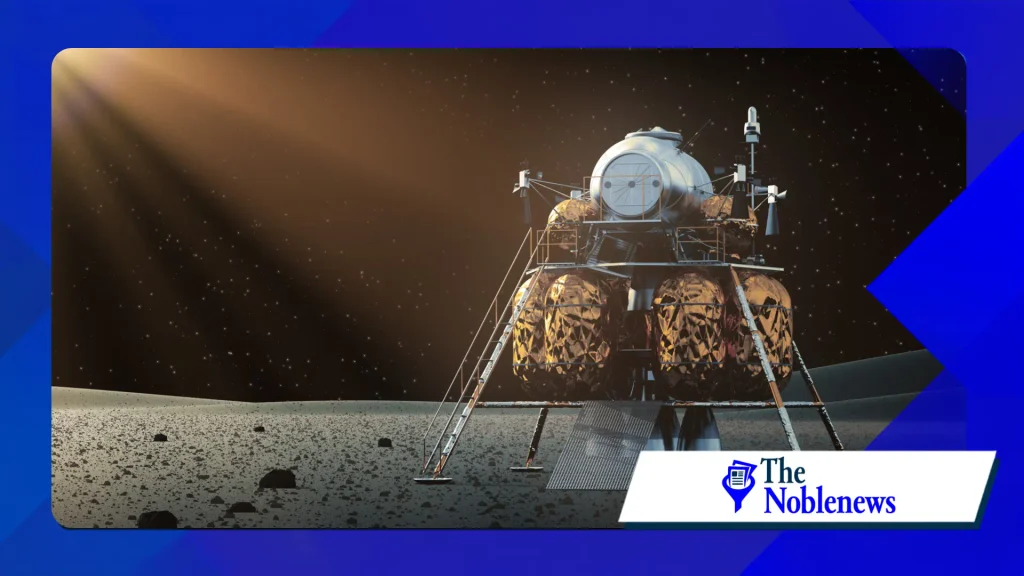
Instead of brief equatorial visits, modern spacecraft are targeting the Moon’s rugged south pole, deploying autonomous rovers, and testing technologies that will sustain long-term human presence.
Points clés à retenir
- Targeting the Lunar South Pole: Modern landers and rovers are focusing on permanently shadowed craters near the south pole to map water ice and volatile compounds.
- Commercial Partnerships Accelerate Science: Programs like NASA’s Commercial Lunar Payload Services (CLPS) allow researchers to send specialized instruments to the Moon faster and at lower costs.
- A Window into Early Solar System History: Because the Moon lacks plate tectonics and weather, its surface preserves a pristine geological record of the early Earth-Moon system.
- Testbed for Deep Space: Lunar missions validate closed-loop life support, radiation shielding, and in-situ resource utilization needed for future missions to Mars.
Why Are Scientists Returning to the Moon Now?
Renewed interest in lunar exploration stems from a combination of major orbital discoveries and breakthroughs in aerospace engineering.
Over the past two decades, remote sensing spacecraft—such as NASA’s Lunar Reconnaissance Orbiter and India’s Chandrayaan-1—detected strong evidence of water ice trapped in dark polar craters.
Confirming the exact quantity, purity, and accessibility of this ice requires landing instruments directly on the surface.
At the same time, falling launch costs and miniaturized sensors have lowered the barrier to entry.
Universities and research institutions no longer have to wait decades for a flagship mission to test a single hypothesis.
Smaller, modular payloads can now hitch rides on commercial landers, dramatically increasing the cadence of lunar science.
What Major Scientific Questions Do Modern Lunar Missions Answer?
Modern lunar exploration goes far beyond planting flags or collecting basic surface rocks.
Researchers are using the Moon as a natural laboratory to investigate fundamental questions across planetary science, astrophysics, and biology.
Mapping Water Ice and Volatiles at the Lunar South Pole
The lunar south pole contains craters whose floors have not seen direct sunlight for billions of years.
Temperatures in these permanently shadowed regions (PSRs) plunge below minus 380 degrees Fahrenheit, creating cold traps that freeze water and other volatile molecules like carbon dioxide and ammonia.
New robotic landers carry drills, mass spectrometers, and neutron spectrometers to analyze subsurface regolith.
Understanding how these volatiles were delivered—whether by ancient comets, asteroids, or solar wind interactions—helps planetary scientists trace the history of water in the inner solar system.
En savoir plus: Pourquoi la recherche sur les microplastiques transforme les sciences environnementales
Practically, harvesting this water could also provide drinking water, breathable oxygen, and hydrogen rocket fuel for future astronauts.
Unlocking the Geological History of the Early Solar System
Earth’s surface is constantly reshaped by erosion, volcanism, and shifting tectonic plates, erasing most geological evidence from its first billion years.
The Moon, by contrast, is a geological time capsule. Its ancient highlands and massive impact basins, such as the South Pole-Aitken basin, preserve a record of the violent asteroid bombardments that shaped both worlds.
By dating rocks from unexplored regions and studying samples returned from the lunar far side—such as those collected by China’s Chang’e-6 mission—geologists can refine the timeline of planetary formation.
++ Pourquoi les petits studios de jeux vidéo défient les éditeurs AAA en 2026
These samples also reveal how the Moon’s interior cooled and why its near side and far side developed vastly different volcanic histories.
Using the Lunar Far Side for Radio Astronomy
Earth is a noisy place for radio astronomers. Terrestrial television broadcasts, mobile networks, and atmospheric interference block faint, low-frequency radio waves from the early universe.
The far side of the Moon is permanently shielded from Earth’s radio chatter, making it the quietest radio environment in the inner solar system.
Upcoming missions are deploying low-frequency radio receivers on the lunar surface to listen for signals from the cosmic “Dark Ages”—the era before the first stars and galaxies ignited.
These observations could provide new insights into the nature of dark matter and the early expansion of the universe.
How Are International and Commercial Missions Changing Lunar Science?
The modern era of Moon exploration is defined by collaboration between government space agencies and private industry.
Rather than relying on a single national program, scientific discovery now benefits from a diverse fleet of international spacecraft.
| Mission / Program | Lead Agency / Partner | Principal axe scientifique | Target Region |
| Programme Artemis | NASA and International Partners | Human-assisted geology, sample return, and deep-space life support | Lunar South Pole |
| CLPS Initiative | NASA and U.S. Commercial Companies | Rapid delivery of compact instruments, regolith analysis, and technology demos | Multiple Near-Side and Polar Sites |
| Chang’e Program | China National Space Administration (CNSA) | Far-side sample return, subsurface radar mapping, and volatile detection | Lunar Far Side and South Pole |
| Chandrayaan Series | Indian Space Research Organisation (ISRO) | Surface elemental composition, thermal profiling, and seismic monitoring | High Southern Latitudes |
| SLIM | Japan Aerospace Exploration Agency (JAXA) | Precision pinpoint landing and olivine mineral analysis | Shioli Crater (Near Side) |
À travers NASA’s Artemis program, astronauts will eventually work alongside robotic rovers to select high-value geological samples in real time.
Entre-temps, NASA’s Commercial Lunar Payload Services (CLPS) contracts private American companies to build and operate robotic landers.
This commercial model accepts higher technical risk in exchange for faster turnaround times and lower costs per mission.
How Can Students, Educators, and Space Enthusiasts Follow Along?
You do not need to work at a space agency to engage with the data coming back from the Moon. Public space organizations release vast amounts of imagery, telemetry, and scientific findings for researchers, educators, and curious readers.
Explore Open Data Archives: Platforms like NASA’s Planetary Data System allow anyone to download high-resolution lunar surface maps, mineral charts, and orbital photography.
Use Interactive Lunar Mapping Tools: Web-based tools such as NASA’s Moon Trek let users measure crater depths, inspect landing sites in 3D, and overlay scientific datasets directly in a browser.
Participate in Citizen Science: Projects hosted on platforms like Zooniverse periodically invite volunteers to help planetary scientists classify boulders, count small impact craters, and map surface features from orbital images.
Follow Live Mission Briefings: Space agencies routinely stream lander touch-downs, rover deployments, and science team press conferences, offering real-time context as new discoveries unfold.
Conclusion
The return to the Moon represents a fundamental shift from brief exploration to sustained scientific inquiry.
By combining precision robotic landers, commercial partnerships, and upcoming crewed expeditions, researchers are uncovering vital clues about planetary evolution, cosmic origins, and off-world resource utilization.
Readers interested in tracking these developments can explore interactive lunar maps through NASA’s public portals or follow upcoming commercial payload launches scheduled throughout the year.
Questions fréquemment posées
How do new lunar missions differ from the Apollo program?
Apollo missions landed near the lunar equator for short stays lasting only a few days, focusing primarily on proving human spaceflight capabilities and collecting surface rocks.
New missions target the complex terrain of the lunar south pole and far side, using autonomous robotics and long-duration instruments to search for water ice, study deep-space radiation, and test sustainable living technologies.
Why is finding water ice on the Moon so important for science?
Water ice preserved in permanently shadowed craters acts as a chemical archive of the early solar system, helping scientists understand how water arrived on Earth.
Beyond pure research, lunar water can be split into hydrogen and oxygen to produce rocket propellant and breathable air, reducing the need to launch heavy supplies from Earth.
What role do private companies play in lunar scientific research?
Private aerospace companies design, build, and launch commercial landers that carry scientific instruments for government agencies and universities.
By handling transportation and landing logistics, commercial providers allow scientists to focus on building specialized sensors and launching experiments more frequently.
Will new lunar missions help prepare astronauts for Mars?
Yes. Operating on the Moon allows space agencies to test radiation shielding, dust-mitigation systems, autonomous navigation, and closed-loop life support in a harsh deep-space environment just a few days away from Earth, reducing risks before crews attempt a multi-year journey to Mars.
++ Science and technology for the Moon
++ From Apollo to Artemis: The evolution of crewed lunar missions
\