
Comment les manettes de réalité virtuelle ont évolué au fil des ans
Annonces
VR controllers have evolved over the years from basic, tracked plastic wands into sophisticated spatial inputs capable of mirroring natural hand movements with remarkable precision.
In the early days of consumer virtual reality, interacting with a digital world meant relying on traditional gamepads or primitive motion trackers.
Today, advanced haptics, finger-tracking capacitive sensors, and ergonomic designs make virtual interactions feel almost physical.
Understanding this technical evolution illuminates how hardware engineers solved major spatial computing challenges, including tracking drift, latency, and intuitive ergonomics.
This article explores the timeline of virtual reality input systems, detailing how tracking tech, button layouts, and tactile feedback reshaped user experiences in gaming, training, and simulation.
Points clés à retenir
- Early VR input relied on traditional gamepads and passive wands, which lacked directional tracking and spatial intuition.
- The launch of room-scale tracking and ergonomic wands established 6 degrees of freedom (6DoF) as the consumer standard.
- Capacitive sensors and hand-tracking tech shifted the industry from basic button presses to natural gesture recognition.
- Modern VR hardware prioritizes realistic tactile feedback through high-definition haptics and dynamic trigger resistance.
- Inside-out optical tracking eliminated external base stations, making advanced controllers portable and consumer-friendly.
The Early Days: Gamepads and Passive Motion Wands
Early consumer VR setups struggled to provide natural spatial interaction. When the Oculus Rift CV1 launched in early 2016, it shipped with a standard Xbox One controller.
While traditional gamepads offered familiar controls for traditional gaming, they broke immersion in virtual spaces.
Pressing a physical thumbstick to move a virtual hand created a disconnect between physical movement and visual feedback.
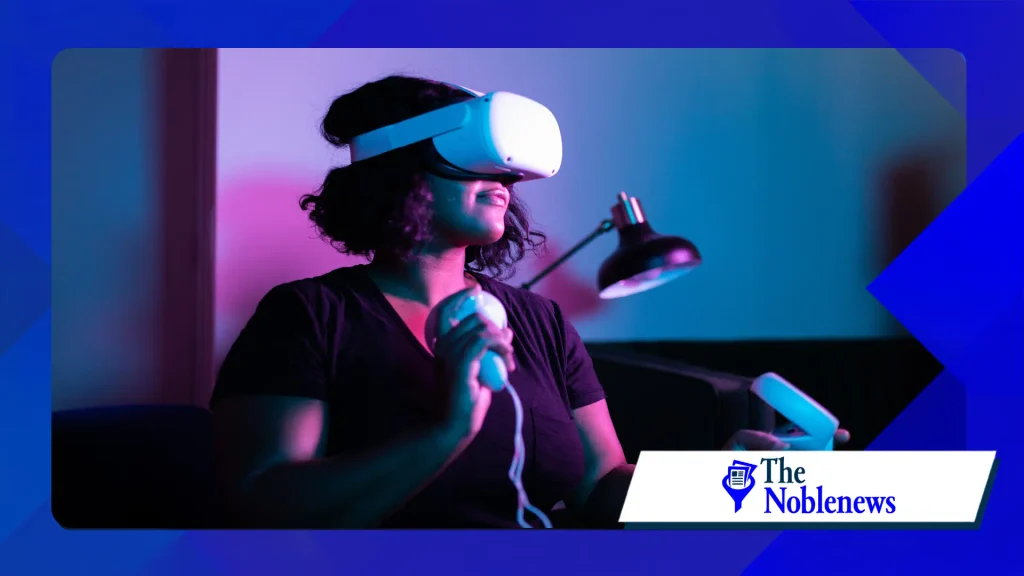
Simultaneously, early motion controllers adapted existing gaming hardware. The PlayStation Move controllers, originally designed for the PlayStation 3, used illuminated plastic spheres tracked by an external camera.
While these devices introduced hand tracking to home VR, they suffered from significant limitations:
- Limited Tracking Range: External cameras easily lost line-of-sight when users turned around or covered the illuminated spheres.
- Lack of Analog Inputs: Early wands often lacked dedicated thumbsticks, forcing developers to map movement to awkward button combinations.
- High Latency: Older optical tracking algorithms created noticeable delay between physical movement and on-screen response.
These early wands proved that spatial tracking was necessary for true immersion, but they lacked the precision required for complex virtual environments.
The 6DoF Breakthrough: Dedicated VR Wands
The introduction of 6 Degrees of Freedom (6DoF) tracking marked the first major turning point in VR controller design.
Unlike 3DoF controllers—which only measure rotational movement (pitch, yaw, and roll)—6DoF systems track both rotation and positional movement across three axes (X, Y, and Z).
In 2016, the HTC Vive debuted with its iconic wand controllers, paired with the Valve Lighthouse tracking system.
External base stations swept swept-laser beams across the room, hitting photosensors embedded in the controllers.
This provided sub-millimeter tracking accuracy and near-zero latency, establishing a benchmark for room-scale VR.
Shortly after, Oculus released the Touch controllers for the Rift. The Touch design introduced an ergonomic ring structure that wrapped around the user’s hands, balancing weight distribution near the palm.
More importantly, Oculus introduced capacitive touch sensors under the buttons, thumbsticks, and triggers.
These sensors detected whether a user’s thumbs or forefingers were resting on a surface, enabling basic hand gestures like pointing and thumbs-up signals without requiring button clicks.
For detailed documentation on how spatial input guidelines and gesture recognition frameworks established these early standards, developers often consult the W3C WebXR Device API Specification.
The Shift to Ergonomics and Finger-Tracking
As VR matured, hardware manufacturers shifted focus from mere tracking stability to natural hand mechanics.
++ Pourquoi la qualité d'affichage est plus importante que la résolution
The ultimate goal was to make the controller disappear in the user’s hand, reducing cognitive load during interactive tasks.
Valve Index “Knuckles” and Individual Finger Tracking
Released in 2019, the Valve Index controllers (commonly called “Knuckles”) redefined immersive input.
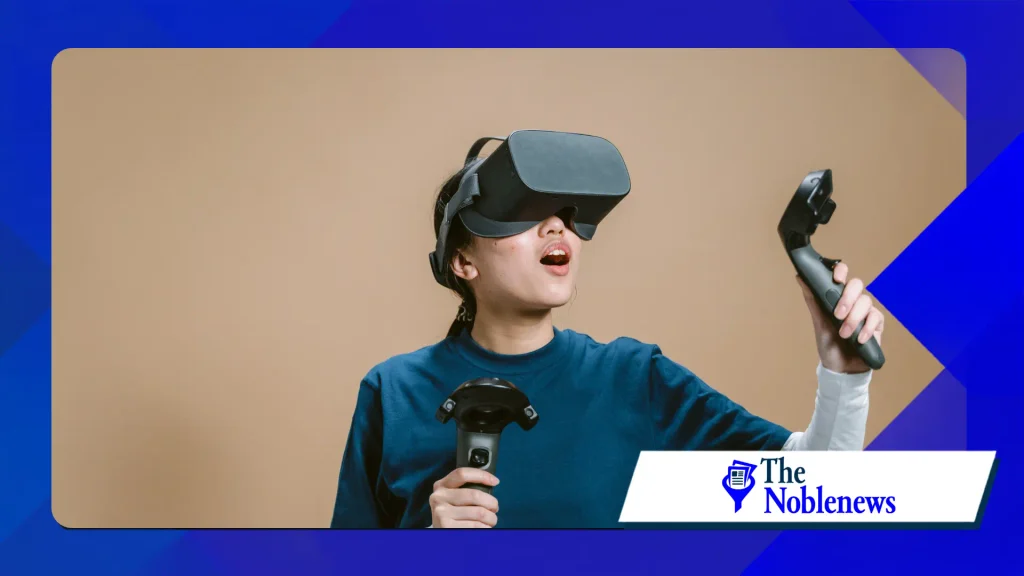
Instead of requiring users to hold a stick continuously, the Index controllers secured to the hand using an adjustable fabric strap. This design allowed players to open their hands completely without dropping the device.
The Index controllers incorporated 87 sensors per pair, combining optical, capacitive, and force sensors to track all five fingers individually.
En savoir plus: Comment les inspections à distance en réalité virtuelle permettent de gagner du temps sur les chantiers
This enabled realistic grabbing and releasing motions: to pick up a virtual object, users simply closed their hand around the grip; to drop it, they opened their palm.
Capacitive Surfaces and Micro-Gestures
Modern controllers rely heavily on capacitive arrays to infer hand posture. By combining proximity detection with touch sensing, controllers estimate finger bend angles across several states:
- Open Palm: Sensors detect no finger contact, signaling a relaxed posture.
- Pinch/Point: Forefinger leaves the trigger while the thumb rests on a secondary sensor.
- Full Grip: Pressure sensors measure squeezing force, allowing games to differentiate between holding a fragile object and crushing a firm one.
The Evolution of Tracking Architectures: Outside-In vs. Inside-Out
The physical shape of VR controllers has always been tied to tracking technology. As tracking hardware evolved, controller design simplified significantly.
In early outside-in tracking (2016–2018), external base stations or camera sensors mounted in the room tracked sensors or LEDs on the controllers.
This approach required a dedicated room setup, but provided high accuracy and zero occlusion.
With the transition to inside-out tracking (2019–present), integrated cameras on the VR headset track infrared (IR) LED rings on the controllers.
This eliminated external base stations, making setups self-contained and portable, though vulnerable to line-of-sight occlusion behind the user’s back.
Modern self-tracked controllers (2022–present) integrate onboard optical cameras and processing chips directly into the controller bodies.
This architecture enables independent positional tracking with complete 360-degree coverage while eliminating tracking rings entirely.
Comparing Controller Generations
The structural evolution of VR controllers reflects dramatic improvements in battery performance, tracking fidelity, and haptics over the past decade.
| Era / Controller Generation | Primary Tracking Method | Key Ergonomic Features | Battery Life Average | Notable Innovations |
| First Gen (2010–2015) PlayStation Move, Early Prototypes | External optical cameras tracking visible light spheres | Straight wand handles, legacy button layouts | 4–6 hours (rechargeable) | Proved spatial motion wands for consumer gaming |
| Second Gen (2016–2018) HTC Vive Wands, Original Oculus Touch | Laser base stations (Lighthouse) or external IR sensors | Ring structures, dual-stage triggers, wrist straps | 6–8 hours (AA batteries or internal lithium) | Sub-millimeter 6DoF tracking, capacitive thumb/index sensors |
| Third Gen (2019–2021) Valve Index, Quest 2 Touch | Headset inside-out camera tracking or base stations | Off-hand straps, individual finger tracking, compact rings | 8–30 hours depending on model | Open-palm gripping, high-density capacitive sensors |
| Fourth Gen (2022–Present) Quest Touch Pro, PS VR2 Sense | On-controller self-tracking cameras or inside-out IR rings | Ringless compact bodies, adaptive triggers, localized haptics | 4–15 hours (rechargeable high-density cells) | HD voice-coil haptics, self-contained tracking processors |
Tactile Realism: Advanced Haptics and Force Feedback
Early VR controllers used basic eccentric rotating mass (ERM) motors—the same simple vibration motors found in traditional console gamepads.
While functional for basic notifications, ERM motors produced muddy, indiscriminate buzzes that failed to convey physical textures or subtle forces.
Modern controllers employ Linear Resonant Actuators (LRAs) and specialized voice-coil drivers capable of precise frequency adjustments. High-definition haptics can simulate distinct physical sensations, such as:
- The metallic click of a mechanical switch.
- The subtle drop of individual raindrops hitting a hand module.
- The textural resistance of sliding a finger across wood versus glass.
Additionally, devices like the PlayStation VR2 Sense controllers integrate adaptive triggers derived from dual-sense technology.
Micro-gears inside the trigger mechanism apply real-time resistance against the user’s finger.
When pulling a virtual bowstring, the trigger grows progressively harder to depress; if a weapon jams, the trigger locks completely.
To review peer-reviewed research on force feedback performance and spatial human-computer interaction models, explore the technical repositories managed by the Bibliothèque numérique IEEE Xplore.
Practical Guidance: Choosing and Maintaining VR Controllers
Maintaining tracking fidelity and extending hardware lifespan requires proper setup and handling. Hardware performance depends heavily on environmental conditions and sensor care.
Optimizing Tracking Accuracy
If experiencing controller drift or tracking loss, review these environment factors:
Check Ambient Lighting: Inside-out optical tracking requires balanced lighting. Avoid direct sunlight, which washes out infrared markers, and avoid complete darkness.
Minimize Reflective Surfaces: Large mirrors, glass tables, and uncovered monitors reflect infrared signals, confusing optical tracking algorithms.
Clean Camera Lenses: Regularly wipe down headset and controller tracking lenses with a dry microfiber cloth to remove oils and dust.
Battery and Maintenance Best Practices
Rechargeable Battery Storage: Lithium-ion controllers should not be left fully depleted for extended periods. Store them at roughly 50% charge if storing for over a month.
Firmware Updates: Always keep controller firmware updated through your system software to benefit from refined tracking algorithms and power-management fixes.
Wrist Straps and Grips: Always secure wrist lanyards during active gaming sessions to prevent accidental impact damage.
The Future of Spatial Input
As spatial computing advances, controller design faces an interesting dual path.
On one end, optical hand-tracking—powered by machine learning—allows users to navigate menus and manipulate virtual objects using their bare hands without holding any hardware.
However, bare-hand tracking lacks physical tactile feedback. Pushing a virtual button in mid-air provides no resistance, creating sensory mismatch.
Because of this limitation, dedicated physical controllers will remain essential for precise tasks, complex gaming, high-precision CAD modeling, and industrial simulations where tactile feedback is critical.
Future controllers will likely become lighter, drop tracking rings entirely, and adopt micro-haptic arrays embedded directly into slim gloves or minimalist palm straps.
Questions fréquemment posées
Why are modern VR controllers dropping external tracking rings?
Modern VR controllers are eliminating tracking rings because tracking architectures have shifted.
Controllers like the Quest Touch Pro feature built-in cameras and dedicated processors that track their position independently without relying on headset cameras to view infrared rings.
Can I use finger-tracking wands with any VR headset?
No. VR controllers depend on specific tracking ecosystems.
Controllers like the Valve Index require external Lighthouse base stations, while inside-out controllers rely on proprietary protocols tied to specific headset hardware and driver software.
How do adaptive triggers work in newer VR controllers?
Adaptive triggers use internal micro-motors and gear assemblies to vary the physical resistance of the trigger pull in real time.
System software alters the force required to pull the trigger based on in-game actions, simulating tension, resistance, or physical stops.
++ The Evolution of VR Controller Holders Over the Past Decade
++ A Brief History of Virtual Reality: Major Events and Ideas
\