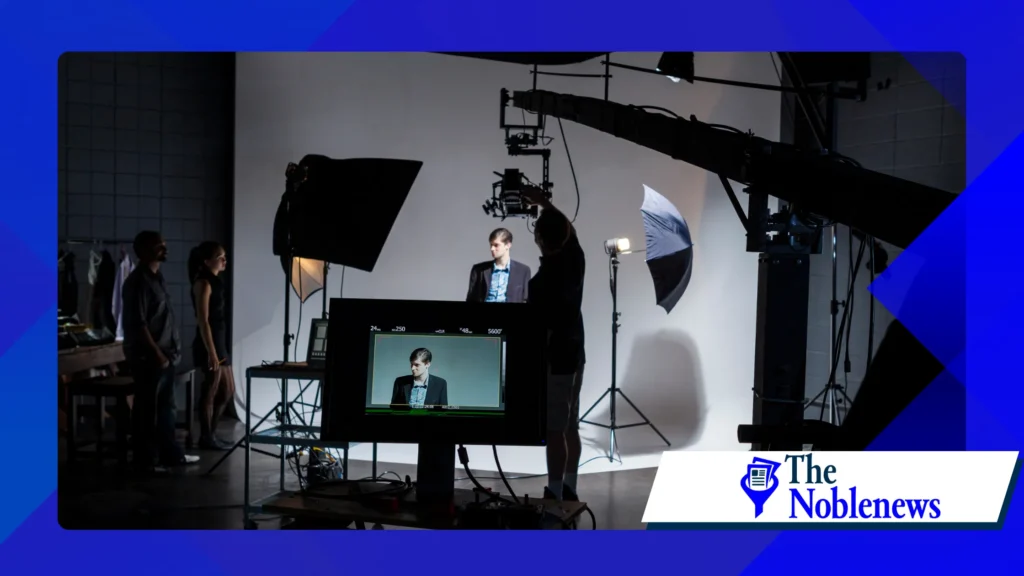
映画の特殊効果の背後にある科学

広告

その Science Behind Movie Special Effects bridges the gap between creative imagination and physical reality, transforming abstract concepts into breathtaking cinematic experiences through advanced mathematics and engineering.

Science Behind Movie Special Effects

探査の概要

  • The messy transition from mechanical rigs to seamless digital simulations.
  • Why fluid dynamics and particle physics are the backbone of modern spectacle.
  • The “invisible” math of light transport theory and photorealistic textures.
  • A cold look at the data: comparing modern rendering technologies.
  • Beyond the screen: How real-time AI is altering the director’s chair.

What is the Science Behind Movie Special Effects in the Modern Era?

Visual effects (VFX) have moved past the era of mere “tricks” to become a rigorous application of classical mechanics.

Every digital explosion or crumbling skyscraper now anchors itself to gravitational constants, ensuring the human eye accepts the chaos as authentic rather than a weightless animation.

Today’s studios rely on sophisticated solvers to mimic the unpredictability of nature. By wrestling with Navier-Stokes equations, developers simulate smoke, fire, and water with surgical precision.

It is a calculated dance where digital elements must interact with live-action footage without a single pixel betraying the illusion.

広告

This technical backbone defines the Science Behind Movie Special Effects. It isn’t just about making things look “cool”; it is about recreating the fundamental laws of our universe within a digital vacuum, forcing 1s and 0s to behave like carbon and oxygen.

How Does Light Transport Theory Achieve Photorealism?

Photorealism lives or dies by how software calculates light paths hitting a surface. Subsurface scattering—the way light penetrates skin rather than bouncing off it—is what keeps a digital character from looking like a plastic mannequin. It captures that subtle, organic “glow” that defines biological life.

Physically Based Rendering (PBR) changed the game by ditching artistic guesswork for raw material data. By plugging in real-world values for conductivity and roughness, computers simulate how photons behave.

広告

This creates the “weighted” visual language we’ve come to expect from modern cinema, where metal feels cold and stone feels porous.

Ray tracing remains the undisputed champion of cinematic lighting, though it is a computational glutton.

This technique traces the journey of light from its source to the camera lens, accounting for every reflection and refraction. It’s an expensive way to render, but the optical truth it provides is undeniable.

Why is Motion Capture Technology Crucial for Character Realism?

We have largely moved away from the heavy rubber prosthetics of the 90s toward biomechanical data harvesting.

Infrared cameras now track microscopic markers on an actor’s face, translating a twitch of a lip or a furrowed brow into digital data that retains the soul of the performance.

その Science Behind Movie Special Effects integrates this movement into skeletal solvers. These systems ensure that digital muscles bulge and skin wrinkles in direct response to the underlying bone structure.

It’s a fascinating, if slightly unsettling, marriage of anatomy and code that bridges the gap between human and avatar.

For those interested in the formal recognition of these technical leaps, the Academy of Motion Picture Arts and Sciences offers a deep dive into the engineering milestones that have received scientific and technical awards.

Which Mathematical Models Power Digital Destruction?

Procedural generation has replaced manual animation for large-scale destruction. Instead of a technician animating every shard of glass, they write scripts based on material fracture mechanics.

This allows objects to shatter realistically based on the specific force and angle of an impact.

Finite Element Analysis (FEA), a tool once reserved for checking the structural integrity of bridges, is now a Hollywood staple.

It calculates stress and strain in real-time. If a digital bridge collapses on screen, it does so because the math says the steel can no longer support the load.

This shift toward simulation is the best weapon against the “uncanny valley.” When the audience sees debris falling, their brains instinctively recognize the acceleration of 9.8 m /s2.

続きを読む: 映画史上トップの悪役たちとその象徴的な理由

If the physics are wrong, the immersion breaks instantly, proving how much we rely on the accuracy of the Science Behind Movie Special Effects.

Science Behind Movie Special Effects

Comparison of Core VFX Technologies (2026 Data)

テクノロジーPrimary Scientific FieldKey ApplicationImpact on Realism
Ray TracingOptics / PhysicsGlobal IlluminationCritical (Lighting)
Neural Radiance Fields (NeRF)Computer Vision / AI3D Scene ReconstructionHigh (Environments)
Fluid SimulationComputational Fluid DynamicsWater, Fire, SmokeHigh (Dynamics)
Performance CaptureBiometrics / KinematicsDigital HumansCritical (Emotion)

What Are the Innovations in Real-Time Rendering?

The industry is currently obsessed with “in-camera” visual effects using LED volumes. This tech essentially kills the green screen, replacing it with massive, high-definition walls displaying environments rendered in real-time by engines like Unreal Engine 5. It turns the set into a living, reactive world.

The secret sauce here is how parallax is managed through precise camera tracking. As the camera moves on its dolly, the background shifts perspective instantly.

It maintains a perfect geometric alignment, ensuring the digital horizon feels as distant and solid as a real one.

++ 世界の見方を変える最高のドキュメンタリー

This isn’t just a gimmick; it fixes the lighting problem. Actors are bathed in the actual light emitted from the screens, meaning reflections on chrome helmets or silk dresses are captured practically.

It’s a return to “real” photography, powered by an immense amount of background processing.

How is Artificial Intelligence Reshaping Visual Craftsmanship?

Generative AI has found a home in the tedious corners of post-production. Tasks like rotoscoping—the frame-by-frame isolation of objects—which used to take weeks of human labor, are now being handled by deep learning models that can identify and track edges with terrifying speed.

Machine learning is also the engine behind the latest de-aging trends. By analyzing thousands of hours of a veteran actor’s younger work, AI can reconstruct facial geometry that feels authentic to their history.

It preserves the nuance of their current performance while overlaying the vitality of their youth.

These advancements represent the latest pivot in the Science Behind Movie Special Effects. We are seeing a shift where the artist becomes a curator of AI outputs, using machine speed to iterate on complex sequences that were previously too expensive or time-consuming to even attempt.

Why is Sound Engineering Considered a Hidden Science?

We often overlook that sound is just as mathematically demanding as light. Sound designers use complex synthesis to create “sonic textures” that give digital objects weight.

If a massive alien ship doesn’t “sound” heavy, the audience won’t believe its scale, no matter how good the render is.

Spatial sound mapping utilizes head-related transfer functions (HRTF) to trick the human ear. This science ensures that as an object moves across the screen, the sound waves are delayed and filtered in a way that mimics how they would hit your actual eardrums in a 3D space.

++ TikTokのデュエット動画がミーム文化を盛り上げている理由

By syncing acoustic resonance with visual density, the film creates a cohesive sensory trap. The brain is surprisingly forgiving of a visual glitch if the audio cues feel physically true, making sound a vital, if invisible, component of the cinematic experience.

Science Behind Movie Special Effects

Reflection

その Science Behind Movie Special Effects has morphed into a multidisciplinary beast where the lines between artist, mathematician, and physicist have blurred beyond recognition.

Every frame is a dense layer of calculated risks and physical simulations. As we navigate 2026, the arrival of neural rendering and real-time AI is pushing us toward a future where “captured” and “created” are indistinguishable.

The greatest irony of this field is that the better the science performs, the less we notice it. A perfect simulation doesn’t scream for attention; it simply exists, allowing the narrative to take center stage while the math hums quietly in the background.

To keep a pulse on the hardware and research driving these changes, the latest technical whitepapers at SIGGRAPH provide the most authoritative look at the future of computer graphics.

FAQ: よくある質問

Does the science behind movie special effects still use physical models?

Absolutely. Many directors prefer “braided” effects, using a physical miniature for texture and lighting reference, then layering digital simulations on top. This hybrid approach often yields the most grounded results.

How long does it take to render a single high-detail frame?

In a heavy simulation, a single frame can still take 24 to 48 hours to process. Even with 2026’s cloud computing power, the sheer volume of light calculations for a 4K or 8K output is staggering.

Is AI going to make VFX artists obsolete?

Unlikely. While AI handles the “grunt work” like masking and basic textures, the high-level creative direction and the correction of “hallucinated” physics still require a human eye with a deep understanding of cinematography.

What is the primary cause of the “Uncanny Valley”?

It usually boils down to micro-expressions and eye movement. If the “Science Behind Movie Special Effects” fails to capture the tiny, involuntary tremors in a human iris or the way skin pores stretch, the brain flags the image as a “threat” or a “fake.”

++ The Art and Science of Special Effects in Film

++ Special effects


\
トレンド