
Nanotechnology in everyday life: from the laboratory to the products you already use
Anúncios

Nanotechnology in everyday life. The whisper of science often goes unheard in the hum of our daily routines.
Yet, a silent revolution has been unfolding, a transformation so small it’s almost invisible.
This revolution is powered by nanotechnology in everyday life, a field that manipulates matter at the atomic and molecular scale.
It’s a journey that began in pristine laboratories and has now infiltrated the very fabric of our world.
This isn’t a futuristic concept confined to sci-fi movies or speculative reports; it’s a current reality shaping our present.
How often do we consider the hidden engineering behind the stain-resistant shirt or the ultra-clear sunscreen? It’s easy to overlook the microscopic marvels working silently in the background.
Consider the journey of a single atom, guided with purpose to create a new material.
Nanotechnology enables this precision, offering us unprecedented control over material properties.
It’s a testament to human ingenuity and a direct result of decades of meticulous research.
We are, in essence, becoming master architects of the molecular world.
This mastery allows for the creation of materials with enhanced strength, conductivity, or even self-cleaning properties. The scale is almost unimaginable, a billionth of a meter.
What if we could create a shield against bacteria on our doorknobs? Or a fabric that never wrinkles? These are no longer hypotheticals.
Nanotechnology makes these possibilities tangible, bringing science fiction closer to our homes.
Unveiling the Nano-Revolution in Your Home
The journey of nanotechnology in everyday life is a compelling one. We see it first in the realm of enhanced materials.
Imagine a tennis racket that’s both lighter and stronger, thanks to carbon nanotubes. Or a pair of athletic shoes that resist odor.
Our homes are filled with these nano-innovations. They can be found in paints that clean themselves, using photocatalytic nanoparticles to break down pollutants.
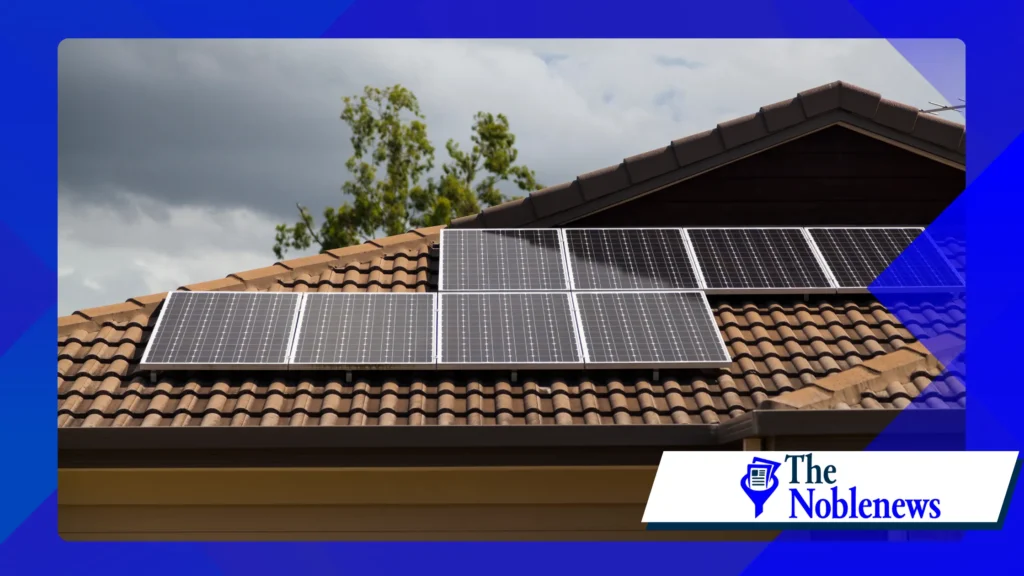
They also improve the efficiency of solar panels.
The ability to manipulate matter at such a minute scale is a game-changer. It offers solutions to long-standing problems.
The development of advanced filters for water purification, for example, is a direct result of nano-engineering.
Even the screens we tap and swipe every day are likely beneficiaries of this technology.
Anti-reflective and anti-glare coatings on our smartphones use nanostructures to control light. This enhances visibility and reduces eye strain.
Read more: The Role of Women in Scientific Advancements
We are increasingly surrounded by these subtle improvements. They are designed to be seamless, to function without drawing attention. Their effectiveness is their greatest marketing tool.
How many of us have a television with vibrant, crisp colors? Nanoparticles called quantum dots are responsible for this.
They emit light at specific, pure wavelengths, creating a more vivid display. This small change has revolutionized the electronics industry.

From Sunscreen to Solar Cells: A Nano-Scale Impact Nanotechnology in everyday life
The impact of nanotechnology extends far beyond our gadgets. It is fundamentally changing how we protect ourselves and harness energy.
Sunscreen, a staple of modern life, has undergone a nano-transformation.
Older sunscreens often left a thick, white residue. This was due to large zinc oxide or titanium dioxide particles. Today’s transparent formulas use nanoparticles of the same compounds.
The tiny size of the particles makes them invisible. Yet, they are just as effective at blocking harmful UV rays.
This seemingly simple change has made sun protection more appealing and accessible.
Similarly, the energy sector is seeing a massive shift. Nano-enhanced solar cells are more efficient at converting sunlight into electricity. They use nanostructures to trap more light.
This improvement is critical for a sustainable future.
Check this out: Neuroscience and the Mystery of Human Consciousness
According to a 2023 report from the National Renewable Energy Laboratory (NREL), ongoing research into advanced materials, including those enhanced by nanotechnology, could push solar cell efficiencies to new theoretical limits.
It’s an important development in the fight against climate change. It makes renewable energy a more viable and competitive option. The world is looking for better energy solutions.
Consider the analogy of a fine-tuned orchestra. Each instrument, no matter how small, plays a crucial part in the harmony.
Nanoparticles are like these instruments. Each one, meticulously placed, contributes to a more efficient or effective product.
Food, Fashion, and a Future Built on the Nano-Scale
Even the food we eat is being touched by this technology. Nanotechnology can be used to create better food packaging. It can detect spoilage or prevent bacteria from growing.
This improves food safety and reduces waste. Think of a tiny sensor embedded in a food package. It could change color if the contents were no longer fresh.
In the world of fashion, the benefits are equally profound. Fabrics with nanoparticles can be stain-resistant and water-repellent. This gives clothes greater longevity and reduces the need for frequent washing.
Some fabrics are even infused with silver nanoparticles to prevent odor. This is a common application in athletic apparel. It keeps us feeling fresh.
These are not just trivial conveniences. They represent a new era of material science. The possibilities seem limitless, and the ethical considerations are becoming increasingly important.
As we move forward, a balance must be struck. We need to embrace the potential of nanotechnology.
At the same time, we need to ensure its development is responsible and safe for humans and the environment.
++ Breaking Down the Cultural Impact of “The Legend of Zelda: Tears of the Kingdom”
We are at a crossroads. The promise of nanotechnology in everyday life is immense. But we must proceed with caution and intelligence.
Will we continue to unlock the secrets of the small? Or will we stumble on the way to a nano-future? The answer lies in our collective commitment to responsible innovation.
It’s a conversation that needs to be had now. Our future, in some way, depends on it.
| Everyday Product | Nanotechnology Application |
| Smartphones | Anti-glare and anti-fingerprint coatings |
| Sunscreen | Transparent zinc oxide and titanium dioxide nanoparticles |
| Self-Cleaning Glass | Titanium dioxide nanoparticles that break down organic dirt |
| Tennis Rackets | Carbon nanotubes for enhanced strength and lightness |
| Clothing | Silver nanoparticles for odor resistance and stain repellents |
Frequently Asked Questions Nanotechnology in everyday life
What is nanotechnology?
Nanotechnology is the manipulation of matter on an atomic and molecular scale.
It involves working with materials that have at least one dimension in the range of 1 to 100 nanometers. This scale is what gives materials new and unique properties.
Is nanotechnology safe?
The safety of nanotechnology is a major area of research. While many products are considered safe, the long-term effects of exposure to certain nanoparticles are still being studied.
Regulations and safety protocols are being developed to ensure responsible use.
What are some of the most exciting future applications?
Future applications are vast and exciting. They include targeted drug delivery in medicine, more efficient energy storage, and environmental cleanup technologies.
The potential to solve complex global challenges is a key driver of research in this field.
++ 10 examples of nano products in everyday life
++ Nanotechnology In Lab Experiments
