
The future of solid state batteries beyond lithium technology
Anúncios
While solid state batteries built on lithium-metal anodes currently capture the spotlight as the immediate upgrade for consumer devices and electric vehicles, pioneering material scientists are looking further into the horizon.
Traditional lithium-ion energy storage systems are rapidly approaching their absolute theoretical limits.
To unlock unprecedented energy capacities, superior thermal resilience, and dramatically lower production expenses, the scientific community is engineering groundbreaking solid-state architectures that bypass lithium entirely.
Key Takeaways
- Next-Generation Chemistries: Beyond lithium-metal designs, advanced post-lithium configurations—including sodium, sulfur, fluoride, and silicon solid-state architectures—are defining the future of energy storage.
- Supply Chain Sovereignty: Alternative ionic materials effectively eliminate geopolitical friction points and volatile pricing bottlenecks linked to global lithium extraction.
- Inherent Safety Advances: Inorganic ceramic and polymer solid electrolytes eradicate the thermal runaway, fires, and volatile venting risks inherent to conventional liquid electrolytes.
- Commercialization Timelines: Pilot production facilities for non-lithium solid-state cells are systematically progressing toward large-scale industrial deployment across grid, automotive, and aerospace sectors.
Why Are Engineers Moving Beyond Traditional Lithium Solid-State Chemistries?
Lithium-based battery architectures present severe systemic bottlenecks despite decades of intensive chemical optimization and manufacturing refinement.
Earth-abundance constraints represent the most immediate barrier to global electrification goals.
Conventional mining and purification processes carry immense environmental overhead, while raw material refining remains heavily concentrated within vulnerable international supply chains.
Early solid-state designs addressed part of this dilemma by replacing volatile liquid organic electrolytes with solid ceramics, polymers, or sulfide glass layers.
This structural shift eliminated traditional safety vulnerabilities like internal short-circuiting and dendrite formation.
However, retaining lithium as the core charge-carrying ion leaves long-term cost models and material scarcity risks completely unresolved.
Transitioning solid-state architectures to alternative ionic carriers—such as sodium, potassium, or multivalent ions like magnesium and aluminum—drastically lowers total bill-of-materials costs.
Because these alternative elements are globally abundant and easily harvested, engineers can achieve equivalent or superior energy densities while protecting production systems from sudden supply shocks.
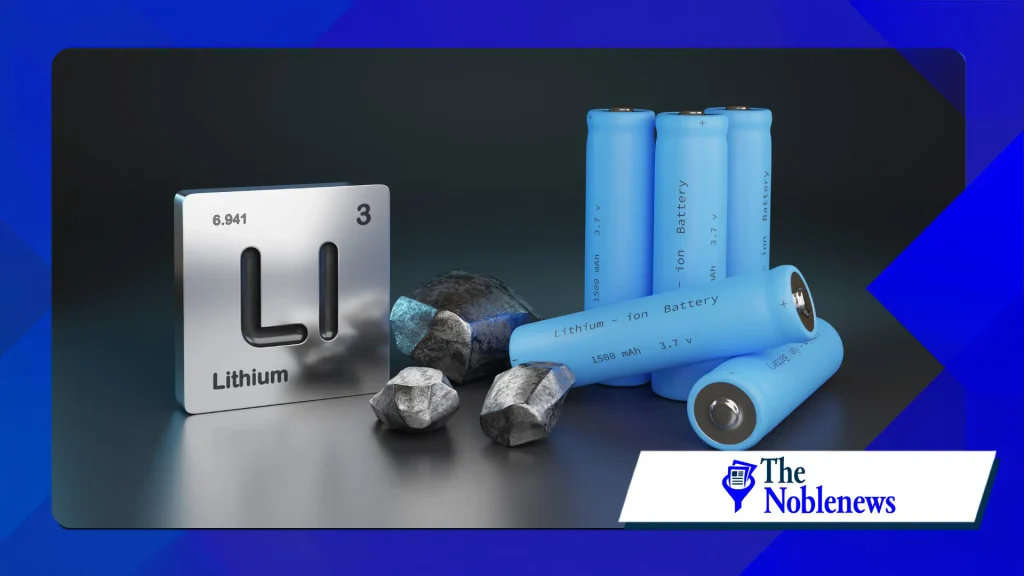
Comparative Structural Performance Overview
Evaluating the technical shifts between legacy liquid cells, baseline solid-state lithium configurations, and advanced post-lithium solid-state systems highlights why research labs are shifting priorities:
Legacy Liquid Lithium-Ion Systems
Volumetric Energy Density: Approximately 600 to 700 Watt-hours per liter.
Electrolyte Flammability: Extremely high due to volatile liquid organic solvents.
Primary Raw Materials: Lithium, cobalt, nickel, and synthetic graphite.
Supply Chain Abundance: Geographically concentrated and ecologically disruptive to harvest.
Operating Temperature Limits: Typically restricted to -20°C through 60°C.
Advanced Lithium Solid-State Systems
Volumetric Energy Density: Approximately 800 to 1,000 Watt-hours per liter.
Electrolyte Flammability: Non-flammable due to solid ceramic or sulfide separators.
Primary Raw Materials: Lithium metal, nickel, manganese, and ceramic precursors.
++ Why microplastic research is changing environmental science
Supply Chain Abundance: Subject to severe lithium resource constraints.Operating Temperature Limits: Approximately -30°C through 90°C.
Post-Lithium Solid-State Architectures
- Volumetric Energy Density: Ranging from 900 to well over 2,500 Watt-hours per liter depending on specific chemistry.
- Electrolyte Flammability: Completely non-flammable inorganic ceramic, glass, or polymer networks.
- Primary Raw Materials: Earth-abundant sodium, elemental sulfur, silicon, or fluoride compounds.
- Supply Chain Abundance: Highly abundant globally with minimal geopolitical bottlenecking.
- Operating Temperature Limits: Broad operational windows spanning -40°C through 120°C.
What Technologies Are Replacing Lithium in Next-Gen Solid State Batteries?
Solid-State Sodium Chemistries
Sodium resides directly below lithium on the periodic table, granting it virtually identical electrochemical properties at a tiny fraction of the procurement cost.
Earth’s oceans and natural soda ash deposits offer essentially limitless sodium reserves, permanently neutralizing the geopolitical concentration risks tied to lithium mining.
++ How Next-Generation Carbon Capture Projects Are Evolving in 2026
Engineers pair sodium anodes with advanced ceramic separators like sodium superionic conductors to eliminate historical operational instabilities.
Modern solid-state sodium prototypes match the performance profiles of standard lithium-iron-phosphate cells while functioning safely across far more extreme hot and cold temperature environments.
All-Solid-State Lithium-Sulfur Hybrids
Sulfur conversion cathodes paired with solid electrolytes represent another monumental leap in energy storage design.
Elemental sulfur provides a theoretical energy capacity up to five times greater than conventional transition-metal cathodes while serving as an easily sourced industrial byproduct that costs very little to refine.
Historic liquid-electrolyte sulfur designs suffered from severe polysulfide shuttling—a destructive chemical process where sulfur compounds dissolved into liquid solvents, destroying battery capacity within a few dozen cycles.
Read more: How algorithm-driven meme trends shape viral content
Replacing liquid matrices with solid, impermeable sulfide or oxide layers traps sulfur active materials at the cathode interface, preserving long-term structural integrity across thousands of charge cycles.
Fluoride Ion Solid-State Architectures
Shifting energy transport mechanics from positive cations to negative anions unlocks extraordinary volumetric efficiency.
Fluoride ion batteries function by transferring fluoride anions between specialized metal-fluoride electrode matrices rather than moving metal cations back and forth.
Pioneering material scientists working across leading energy research facilities, including the U.S. Department of Energy’s National Renewable Energy Laboratory, are actively developing high-conductivity solid electrolytes capable of rapid fluoride anion transport at ambient room temperatures.
Fluoride-based systems offer theoretical volumetric energy densities exceeding 2,500 Watt-hours per liter, quadrupling the storage capacity of conventional commercial battery packs.
How Do Solid Electrolytes Solve Post-Lithium Mechanical Challenges?
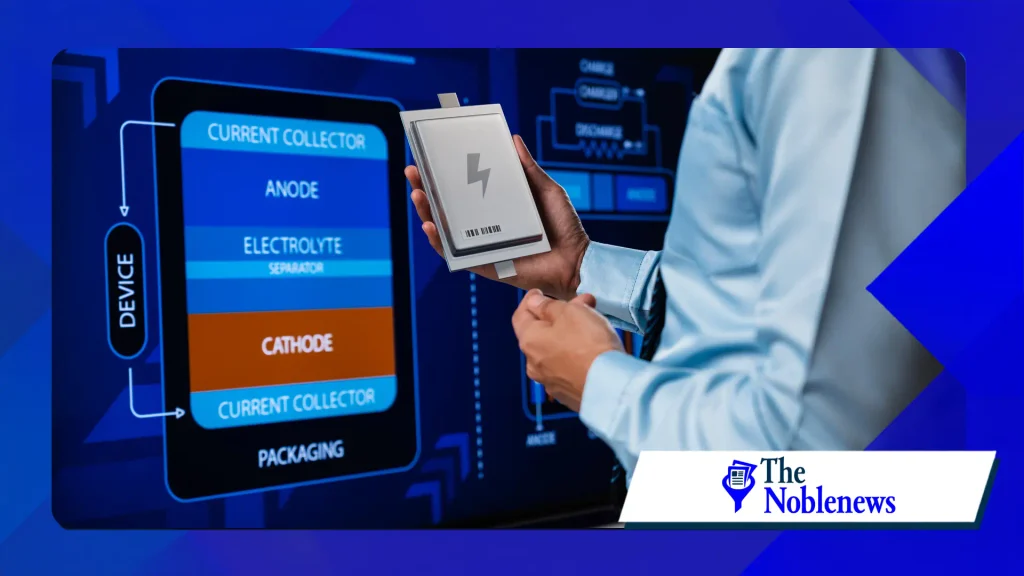
Alternative charge-carrying ions exhibit significantly larger atomic radii and complex charge densities compared to lithium.
Sodium ions are physically larger, while multivalent alternatives like magnesium or aluminum carry double or triple ionic charges that bind tightly to internal crystal structures during discharge.
Solid-state separators act as durable mechanical scaffolding that absorbs structural stress without fracturing during ion movement.
Engineering these resilient interfaces requires precise material science selection across three primary electrolyte categories:
- Sulfide Ceramics: Highly ductile matrices that maintain exceptionally low physical resistance across interfaces, making them perfect for larger ions like sodium.
- Oxide Perovskites: Mechanically rigid barriers that offer absolute chemical stability against degradation under extremely high voltage conditions.
- Polymer-Ceramic Composites: Hybrid material networks blending flexible manufacturing handling with superior mechanical toughness.
Comprehensive research featured across top academic journals like Nature Energy demonstrates that engineering soft-yet-durable hybrid interfaces allows solid electrolytes to adapt to dramatic electrode volume expansion without losing electrical contact or forming internal cracks.
Theoretical Energy Density Thresholds
Understanding the absolute potential of different solid-state battery configurations reveals why investment capital is moving toward non-lithium research:
- Traditional Liquid Lithium-Ion: Reaches maximum practical density near 700 Watt-hours per liter.
- Baseline Lithium Solid-State: Reaches structural limits near 1,000 Watt-hours per liter.
- Solid-State Sodium Systems: Achieves practical working capacities around 850 Watt-hours per liter with ultra-low material costs.
- Solid-State Sulfur Hybrids: Reaches impressive energy densities approaching 1,500 Watt-hours per liter.
- Fluoride Ion Solid-State: Unlocks astounding theoretical maximums reaching beyond 2,500 Watt-hours per liter.
Which Industries Will Adopt Post-Lithium Solid State Cells First?
Commercial market integration schedules depend directly on specific energy density needs, weight restrictions, and budget constraints across different commercial sectors:
Utility-Scale Grid Energy Storage
Primary Chemistry Focus: Solid-State Sodium-Ion and Sodium-Sulfur configurations.
Market Integration Timeline: Early commercial deployment and infrastructure buildout.
Key Adoption Driver: Extremely low raw material acquisition costs, deep discharge tolerance, and total fire safety near urban energy hubs.
Mass-Market Automotive Manufacturing
Primary Chemistry Focus: Solid-State Sodium and High-Capacity Silicon-Anode hybrids.
Market Integration Timeline: Mid-decade commercial vehicle fleet rollouts.
Key Adoption Driver: Dramatic cost reductions per kilowatt-hour, enabling affordable family electric vehicles without relying on expensive nickel or cobalt.
Consumer Electronics and Wearables
Primary Chemistry Focus: Ultra-Dense Silicon and Solid-State Lithium-Sulfur cells.
Market Integration Timeline: Active high-end device adoption.
Key Adoption Driver: Maximizing battery life inside ultra-thin device chassis while eliminating thermal swelling risks.
Commercial Aviation and Maritime Transport
Primary Chemistry Focus: Fluoride Ion and Advanced Multi-Electron Solid-State Architectures.
Market Integration Timeline: Long-term industrial scale and certification phases.
Key Adoption Driver: Achieving the massive power-to-weight ratios necessary to carry heavy industrial payloads over transcontinental distances.
What Manufacturing Hurdles Delay Mass Production?
Transitioning groundbreaking chemistry from laboratory testing tables to giga-scale automated factory floors presents enormous manufacturing challenges.
Solid materials require absolute, atom-level contact across every internal interface so ions can pass back and forth efficiently.
Achieving this degree of surface contact across millions of commercial cells demands completely redesigned pressing and sintering processes.
Atmospheric exposure creates another significant production obstacle.
Many advanced sulfide-based electrolytes react instantly when exposed to ambient air moisture, releasing hazardous hydrogen sulfide gas and destroying cell conductivity.
Battery manufacturers must build massive dry room facilities featuring inert gas environments, driving up initial setup investments.
Furthermore, high-speed roll-to-roll manufacturing machinery must be re-engineered to process brittle solid ceramic sheets without introducing microscopic hairline fractures.
Advanced automated inspection systems now use high-resolution ultrasonic imaging and laser analysis to scan internal cell layers for tiny microscopic defects before finished batteries ever leave factory floors.
Final Thoughts
The ultimate trajectory of clean energy storage extends far beyond minor tweaks to century-old lithium chemistries.
Moving decisively toward non-lithium solid-state configurations—including sodium, sulfur, and fluoride platforms—directly resolves critical material shortages, reduces environmental destruction, and fundamentally drops energy storage costs.
As automated pilot plants mature into full gigafactories, these next-generation solid-state architectures will serve as the invisible backbone of modern transportation, aviation, and global power grids.
Frequently Asked Questions
What is the main advantage of post-lithium solid state batteries?
Post-lithium solid state batteries utilize globally abundant, low-cost raw elements such as sodium, sulfur, or fluoride instead of expensive and geographically scarce lithium reserves.
They deliver far higher potential energy capacities, complete physical safety against thermal runaway fires, and drastically lower long-term manufacturing costs.
Will solid-state sodium batteries replace lithium-ion in electric vehicles?
Solid-state sodium battery designs are positioned to power entry-level, high-volume electric vehicles where low vehicle sticker price takes priority over extreme driving range.
High-performance, long-range luxury electric vehicles will likely rely on solid-state sulfur or advanced silicon-anode designs to maximize distance between charges.
Are solid state batteries safer than traditional lithium-ion batteries?
Solid state batteries completely eliminate volatile, highly flammable liquid organic solvents.
By swapping liquid components for solid ceramic, glass, or polymer electrolytes, these advanced cells prevent internal short circuits, thermal runaway, and dangerous battery fires even when subjected to extreme heat or physical puncture.
When will post-lithium solid state batteries become commercially available?
Solid-state sodium configurations targeting stationary utility power grids are already entering early commercial deployment phases.
Advanced high-density platforms like solid-state fluoride anion cells are targeted for widespread industrial deployment toward the end of the decade as continuous manufacturing techniques mature.
++ Beyond Lithium: New Battery Tech Starts to Break Through
