
Exploring Virtual Reality’s Role in Personalized Learning
Anúncios
This new era brings to light the critical and evolving virtual reality’s role in personalized learning.
In a world craving bespoke experiences, the very fabric of education is undergoing a radical transformation.
Beyond traditional classrooms, a new paradigm emerges, one where the learner is at the center of a dynamic, interactive universe.
This shift isn’t just about integrating a new tool; it’s a fundamental re-imagining of how knowledge is acquired and retained.
No longer are we constrained by passive lectures or static textbooks. Instead, students are now able to step directly into the content, becoming active participants in their educational journey.
Beyond the Textbook: Immersive Experiences for Deeper Understanding
The static nature of traditional learning materials often fails to capture the complexity and nuance of subjects like history, biology, or engineering.
But what if a student could walk through Ancient Rome, witnessing its architecture and social structures firsthand?
Or perhaps, could they disassemble and reassemble a human heart, understanding its intricate mechanics from the inside out?
This is the power of VR. It bypasses abstract concepts and replaces them with concrete, sensory-rich experiences.
The brain processes these simulated realities much like real-world events, leading to a deeper and more lasting comprehension of the material.
This method transforms learning from a memorization exercise into a genuine discovery.
The ability to fail and retry in a safe, virtual environment is a game-changer.
Students can practice complex surgical procedures or test engineering designs without real-world consequences.
This iterative process of trial and error is a powerful engine for building both knowledge and confidence.
A Digital Tutor: Adapting to Individual Needs and Pace
One of the most significant challenges in education is catering to the diverse needs of every student.
A single-paced curriculum often leaves some learners behind while holding others back.
This is where virtual reality’s role in personalized learning truly shines.
VR platforms can be designed to dynamically adjust the difficulty and content based on a student’s performance and pace.
A student struggling with a particular topic can be presented with alternative visual explanations and guided practice scenarios.
Read more: Virtual Reality in Courtrooms: Evidence Presentation and Training
Conversely, an advanced learner can be fast-tracked to more complex modules or given opportunities to explore a subject in greater depth.
Think of it as a personal tutor, but one who can create any learning environment imaginable.
The system can track a student’s eye movements, interactions, and responses to pinpoint areas of weakness.
It can then offer tailored interventions, ensuring no student is left to their own devices in a sea of information they don’t grasp.
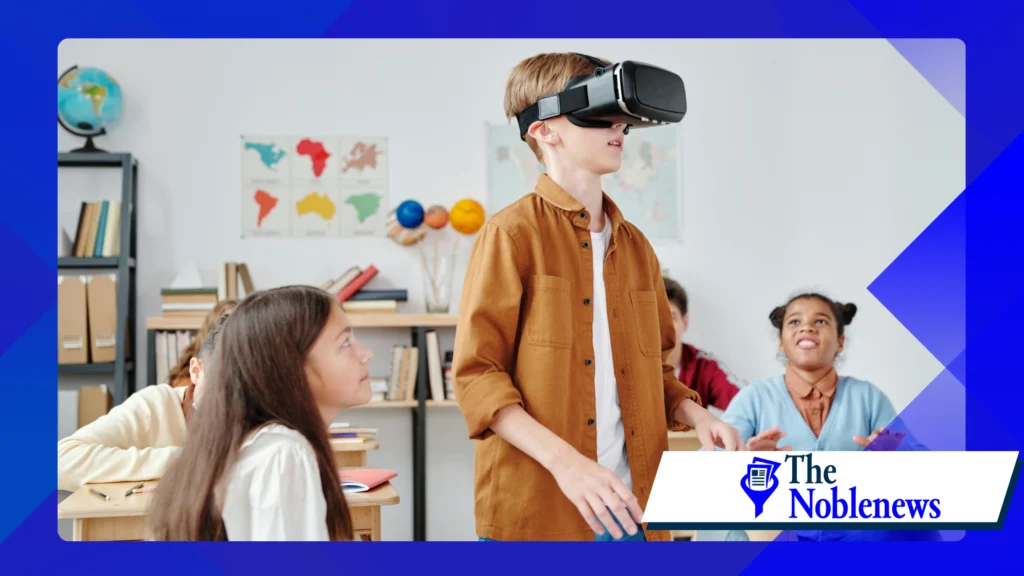
Creating Empathy and Real-World Skills
Beyond academic subjects, VR is proving to be a powerful tool for developing empathy and crucial soft skills.
By placing a user in someone else’s shoes, whether it be a historical figure or a person from a different culture, VR fosters a deeper sense of understanding and connection.
For example, a medical student can simulate conversations with patients from diverse backgrounds, learning how to navigate sensitive topics and build rapport.
This practical application of knowledge in a safe setting is invaluable for professional development. It’s not just about what you know, but how you can apply it.
See how interesting: Top Scientific Breakthroughs You Need to Know in 2025”
According to a 2023 study by PwC, students trained in VR were four times faster to train than in a traditional classroom setting, highlighting its efficiency.
This statistic underscores the immense potential for VR to streamline educational processes while maintaining high-quality outcomes.
Overcoming Barriers: Accessibility and Integration
While the promise of this technology is immense, challenges remain.
The cost of hardware and the need for high-speed internet can be significant barriers to widespread adoption.
Furthermore, the development of high-quality, educationally sound content requires collaboration between technologists and educators.
However, as the cost of VR headsets decreases and content libraries grow, these barriers will inevitably fall.
The future of education is not a distant, futuristic concept; it is being built right now.
It is a future where learning is not a one-size-fits-all model, but a tailored journey for every individual.
Just as a master gardener tends to each plant with unique care, providing specific nutrients and light for optimal growth, educators can now use VR to cultivate individual minds.
Check this out: The story of lost Atari 2600 prototypes
Each student can be nurtured with the exact type of experience they need to flourish.
This profound analogy captures the essence of virtual reality’s role in personalized learning.
The Future of Learning: From Classroom to Cosmos
The convergence of personalized learning and virtual reality is a powerful force for change.
It moves us away from the industrial-era model of education and into a new age where curiosity, exploration, and individual agency are paramount.
It’s an exciting time to be a learner, and an even more exciting time to be an educator.
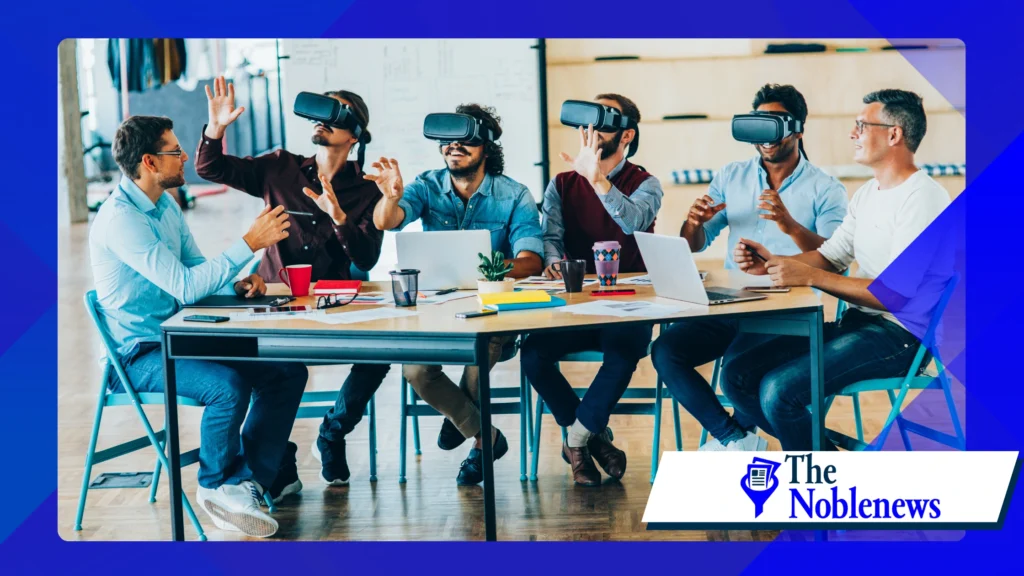
Consider this table, illustrating the fundamental shifts in educational paradigms:
| Traditional Learning | VR-Enhanced Personalized Learning |
| Passive consumption of information | Active, immersive exploration |
| Standardized, one-size-fits-all curriculum | Adaptive, individualized pathways |
| Focus on rote memorization and testing | Emphasis on experiential understanding and application |
| Teacher-centric delivery | Learner-centric discovery |
The table above illustrates the profound shift in educational philosophy.
The virtual reality’s role in personalized learning is to provide the platform for this fundamental change. It is not just about what is taught, but how it is experienced.
A New Horizon for Education
The journey to fully integrate VR into our educational systems is just beginning.
But the signs are clear: this technology holds the key to unlocking human potential on a scale we have only dreamed of.
It is an opportunity to make learning not just effective, but truly engaging and empowering.
In a world of infinite information, doesn’t it make sense to provide a learning experience as vast and varied as the individuals who undertake it?
Frequently Asked Questions
Is VR only useful for STEM subjects?
No, while often associated with STEM, VR is highly effective for humanities, arts, and soft skills training.
It can be used to simulate historical events, explore art museums, or practice public speaking. The range of applications is constantly expanding.
Is VR too expensive for most schools to afford?
The cost of VR hardware is decreasing rapidly. Additionally, schools can explore alternative models, such as using VR labs for shared use or partnering with tech companies.
The return on investment in terms of student engagement and learning outcomes is significant.
Can VR replace teachers?
Absolutely not. VR is a powerful tool, not a replacement for a great teacher.
Educators are crucial for guiding the learning process, facilitating discussions, and providing mentorship. VR enhances their ability to create engaging, personalized lessons.
++ Virtual reality and augmented reality, essential in education today
++ How personalized and effective is immersive virtual reality in education?
