
Why VR museum preservation protects fragile heritage sites
Annonces
Comprendre comment VR museum preservation protects fragile heritage sites reveals how cultural institutions can share world history globally without putting delicate monuments at risk.
Cultural landmarks and ancient artifacts face constant threats from foot traffic, climate shifts, and natural erosion.
When millions of visitors walk through historic spaces each year, even subtle changes in humidity, vibration, and accidental touch slowly wear away irreplaceable surfaces.
By pairing high-resolution digital scanning with virtual reality experiences, museums and conservation teams create accurate digital replicas of vulnerable locations.
This approach relieves physical strain on original sites while giving students, researchers, and travelers meaningful access from anywhere in the world.
Points clés à retenir
- Reduced physical wear: Virtual tours divert heavy visitor traffic away from delicate floors, frescoes, and narrow chambers.
- Permanent digital records: Technologies like photogrammetry and LiDAR capture sub-millimeter surface details before weathering or disasters occur.
- Global accessibility: Virtual reality removes geographic, financial, and mobility barriers for students and museum visitors.
- Non-invasive research: Conservators and archaeologists can measure, inspect, and monitor structural changes inside a virtual environment without touching original materials.
What Threatens Fragile Heritage Sites Today?
Many historic monuments, caves, and archaeological sites were never built to handle modern tourism or changing environmental conditions. Even well-managed cultural sites experience gradual deterioration when physical access remains unrestricted.
Overtourism and Microclimate Shifts
Human presence alters the internal environment of enclosed spaces. Every visitor exhales carbon dioxide, radiates body heat, and introduces moisture and microscopic dust particles.
In sealed environments like prehistoric caves or ancient tombs, elevated humidity and carbon dioxide levels accelerate chemical weathering and encourage microbial growth on painted walls.
Famous examples, such as the Lascaux Cave in France, demonstrated how quickly human breath and artificial lighting can damage prehistoric pigments.
++ Comment les manettes de réalité virtuelle ont évolué au fil des ans
Once biological contamination appears, reversing the damage without harming the underlying rock or paint becomes extraordinarily difficult.
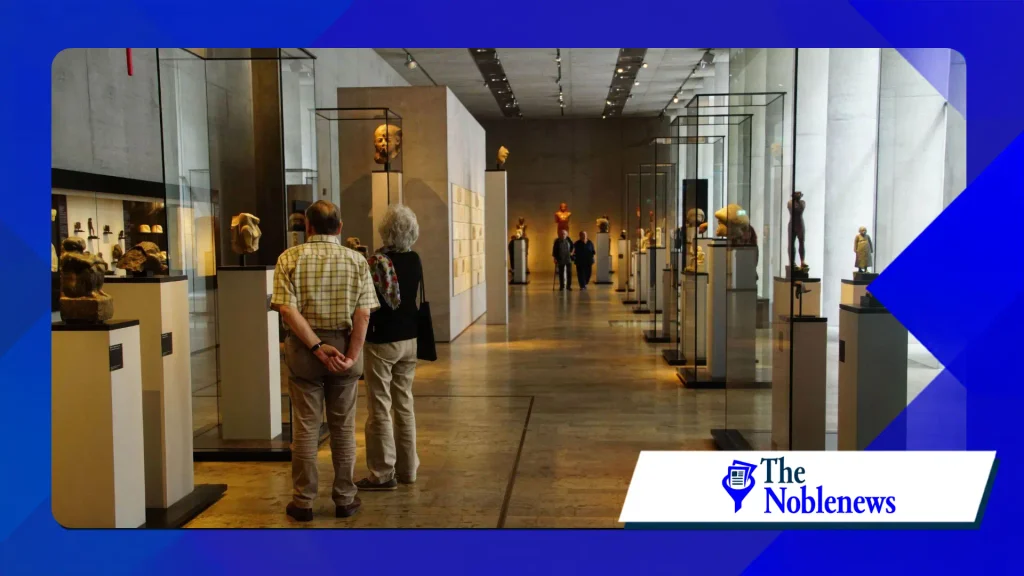
Natural Disasters, Conflict, and Erosion
Beyond daily visitor impact, heritage sites remain vulnerable to sudden crises. Earthquakes, wildfires, coastal flooding, and armed conflicts can destroy centuries-old architecture in hours.
Traditional physical conservation slows decay, yet it cannot prevent catastrophic loss if a building collapses or burns.
En savoir plus: Comment les flux de travail de fabrication en réalité virtuelle améliorent la précision de la production
Creating an accurate digital baseline ensures that cultural knowledge survives even when physical structures suffer damage.
How Does VR Museum Preservation Work?
Virtual reality preservation relies on non-contact reality capture tools to record a site’s exact geometry, texture, and lighting.
Conservation specialists then process this spatial data into interactive 3D environments viewable through VR headsets or web browsers.
Laser Scanning and LiDAR
Light Detection and Ranging (LiDAR) instruments emit rapid laser pulses to measure distances between the scanner and surrounding surfaces.
A tripod-mounted or handheld LiDAR scanner captures millions of data points per second, producing a dense 3D “point cloud.”
Because the process uses light rather than physical contact, technicians can document unstable masonry, fragile textiles, or delicate carvings safely.
High-Resolution Photogrammetry
Photogrammetry uses overlapping photographs taken from multiple angles to reconstruct 3D shapes and true-to-life surface colors.
Specialized software identifies matching visual features across hundreds or thousands of images, stitching them into a textured 3D mesh.
++ L'essor de la collection de cartes fantastiques parmi les fans de création d'univers
When combined with LiDAR geometry, photogrammetry yields photorealistic virtual spaces where viewers can examine brushstrokes, chisel marks, or stone weathering up close.
Interactive VR Reconstruction
Once engineers optimize the 3D model, software developers build interactive layers around it.
Museums can add spatial audio, historical annotations, and lighting simulations that show how a temple or gallery looked during different historical eras.
Organizations such as UNESCO highlight digital documentation and innovative technologies as valuable tools for safeguarding cultural heritage and raising public awareness worldwide.
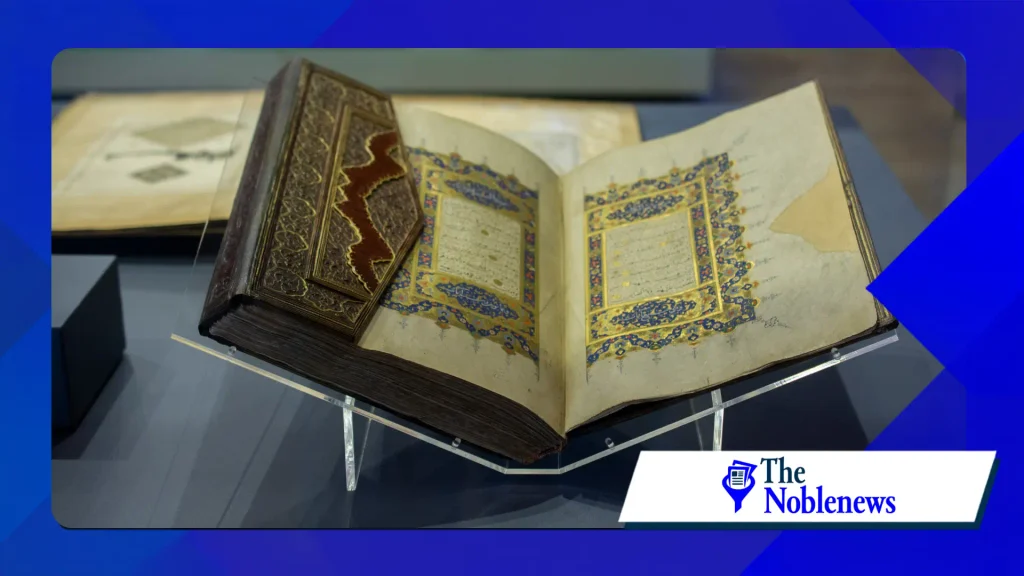
Physical Visits vs. VR Heritage Preservation
Both in-person tourism and virtual preservation play important roles in cultural education. Comparing their impact illustrates why institutions increasingly pair limited physical access with immersive digital alternatives.
| Preservation Factor | Traditional In-Person Access | VR Museum Preservation |
| Physical Impact on Site | High wear from footsteps, humidity, CO2, and accidental contact | Zero physical contact or environmental disruption |
| Visitor Capacity | Strictly limited by room size, safety rules, and conservation caps | Unlimited simultaneous global access |
| Accessibilité | Restricted by travel costs, geography, and physical mobility | Accessible from classrooms, homes, and local museums |
| Research Utility | Requires scaffolding, special permits, and limited hands-on time | Enables repeatable, non-invasive measurements and lighting tests |
| Disaster Resilience | Vulnerable to permanent loss from fire, earthquakes, or war | Preserves an exact geometric and visual archive for restoration |
Key Benefits of Virtual Reality for Cultural Conservation
Adopting VR technology delivers practical advantages that extend well beyond entertainment. For museum curators, educators, and preservationists, virtual environments solve long-standing conservation challenges.
Protecting Original Artifacts Without Closing Doors
When a site faces severe structural stress, officials often have to restrict entry or close rooms entirely.
Virtual reality offers a middle path. Institutions can build dedicated VR viewing galleries nearby—similar to physical replica caves—so visitors still experience the scale and atmosphere of a restricted monument while the original site stays sealed and stable.
Supporting Scientific Monitoring and Restoration
Digital twins serve as diagnostic tools for conservators. By scanning a monument every few years and comparing the point clouds, engineers can detect millimeter-level shifts in foundation settling, stone erosion, or crack expansion.
If a historic structure suffers damage from a storm or fire, archived 3D scans provide exact blueprints to guide authentic physical restoration.
Programs backed by institutions like the Smithsonian Institution demonstrate how 3D digitization preserves fragile specimens and historic objects for both public learning and scientific study.
Expanding Educational Equity
Most people will never have the financial means or physical ability to visit remote archaeological digs or fragile subterranean chambers.
VR museum exhibits bring those spaces directly into public libraries, K–12 classrooms, and university lecture halls.
Students can inspect artifacts from angles that would be impossible behind glass display cases, deepening engagement with art, history, and archaeology.
Practical Ways Museums and Educators Can Support Digital Preservation
Whether you manage cultural collections, teach history, or simply visit museums, you can encourage responsible heritage conservation through practical choices.
Prioritize non-invasive digitization standards: Cultural institutions planning digital archives should combine calibrated photography with laser scanning so data remains useful for future conservation research, not just promotional tours.
Pair VR kiosks with fragile exhibits: Museums with restricted galleries can place headsets or interactive 3D screens near closed areas, satisfying visitor curiosity without increasing foot traffic.
Integrate verified 3D collections into curricula: Teachers and homeschool educators can use open-access museum 3D repositories to let students explore ancient architecture and artifacts safely.
Respect physical conservation rules on-site: When visiting historic landmarks in person, follow posted guidelines—avoid touching walls, refrain from flash photography where prohibited, and stay on designated walkways.
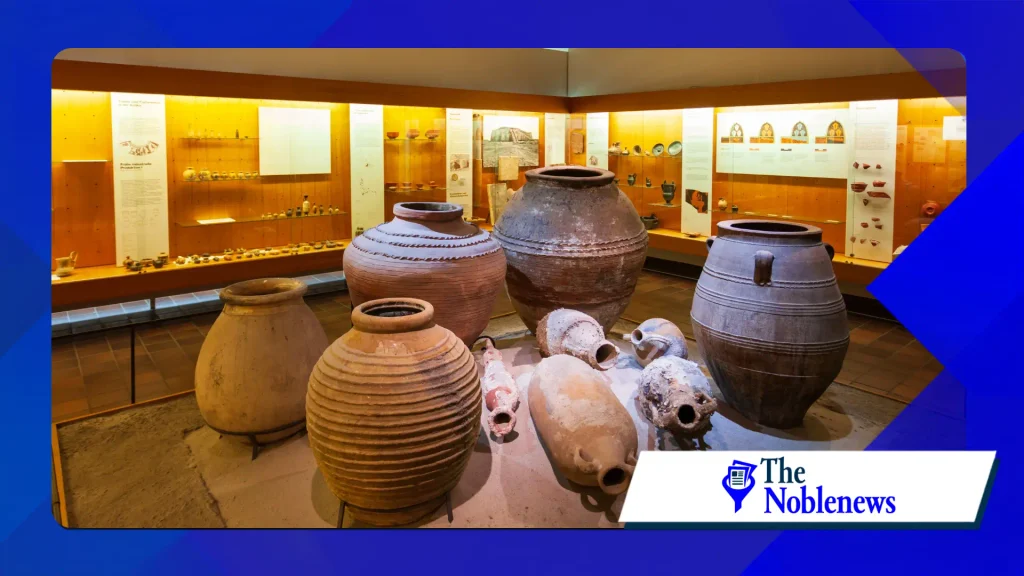
Conclusion
Virtual reality does not replace the emotional value of standing before an authentic historical monument, nor is it meant to.
Instead, VR museum preservation protects fragile heritage sites by absorbing the heavy demands of mass tourism, creating permanent digital archives against unforeseen disasters, and expanding educational access across the globe.
As scanning hardware becomes faster and more affordable, virtual preservation will remain one of the most reliable ways to keep humanity’s shared history intact for future generations.
If you want to explore digital heritage today, start by browsing open-access 3D collections from major public museums and cultural institutions online.
Questions fréquemment posées
Does VR preservation replace real museum visits?
No. Virtual reality complements physical museums rather than replacing them.
It allows people to explore fragile, closed, or distant sites that cannot safely accommodate large crowds, while encouraging informed appreciation for monuments that remain open to visitors.
How accurate are virtual reality heritage scans?
Modern LiDAR and photogrammetry systems routinely capture surface details down to sub-millimeter precision.
While consumer VR headsets sometimes use compressed models for smooth performance, museums archive the uncompressed master scans for scientific measurement and restoration.
Can virtual reality help rebuild damaged historical landmarks?
Yes. High-resolution 3D scans recorded before a fire, earthquake, or conflict give architects and artisans exact geometric measurements, surface textures, and structural proportions to guide accurate physical repairs.
Do you need an expensive VR headset to view preserved heritage sites?
Not always. While standalone or PC-tethered VR headsets offer the deepest sense of scale and immersion, most museum 3D archives and virtual tours also run smoothly on standard desktop web browsers, tablets, and smartphones.
++ What is the role of virtual reality in cultural heritage?
\